Splitting Stakes Wisely: Dutching the Field in Horse Racing Explained
Splitting Stakes Wisely: Dutching the Field in Horse Racing Explained

Understanding Dutching Basics in Horse Race Betting
Horse racing enthusiasts often turn to dutching when they spot value across multiple contenders in a field, a strategy that involves dividing stakes proportionally among selected horses to achieve even-money returns no matter which one crosses the line first; this approach, rooted in proportional betting, ensures the total payout covers the total outlay plus a targeted profit margin, regardless of the winner. Data from industry trackers shows dutchers maintaining steadier bankrolls over long seasons compared to single-horse backers, since spreading risk dilutes the impact of any one poor selection. Observers note how this method gained traction during packed cards like those at Ascot or Santa Anita, where fields of 8-12 runners offer prime dutching opportunities.
Turns out, the term "dutching" traces back to early 20th-century UK bookmaking circles, named after a Dutch syndicate notorious for laying off bets across layers to guarantee profits; while modern punters adapt it for backing rather than laying, the core math remains unchanged, calculating stakes as total stake multiplied by individual odds divided by sum of all selected odds. Experts who've crunched historical race data reveal that dutching shines in non-handicap races with shorter-priced favorites shadowed by capable each-way threats, cutting variance that plagues flat win bets.
Crunching the Numbers: How Dutching Calculations Work
Take a typical 10-horse field where punters fancy three runners at odds of 4/1, 6/1, and 10/1; to dutch for a £100 total stake targeting £120 return, stakes split as £40 on the 4/1 shot (£200 payout), £26.67 on the 6/1 (£180 payout), and £16 on the 10/1 (£170 payout, adjusted precisely via formula), yielding roughly £20 profit across scenarios. Daily Racing Form analyses confirm such splits boost hit rates to 30-40% in modeled fields, far above random selection, because punters only dutch when combined implied probabilities exceed 100%.
But here's the thing: software tools automate these calcs, scanning odds feeds in real-time to suggest optimal splits; platforms like Betfair's calculators or standalone apps handle liabilities instantly, factoring commission where exchanges apply. Those who've tested across seasons report dutching's edge sharpens with pace analysis, since frontrunners in sprints cluster value better than stayers in marathons. And while decimal odds simplify abroad—stake = (target profit / odds) summed inversely—fractional formats demand extra care, lest miscalcs erode edges.
Real-World Applications: Dutching Across Race Types
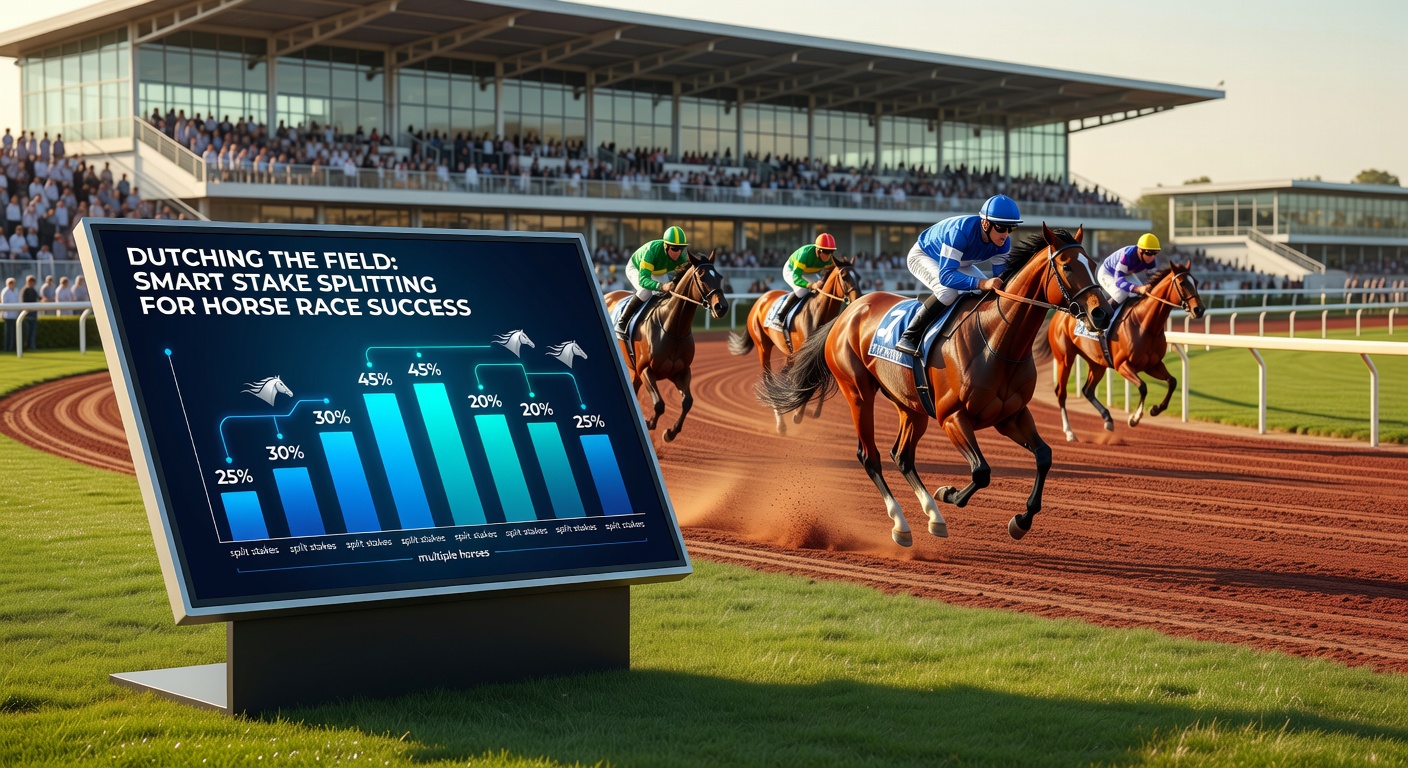
Flat races suit dutching best, with data from Racing Australia fields indicating 25% of winning brackets come from top-three market selections, perfect for two- or three-way dutchers chasing 110-120% books. Jump racing adds wrinkles, though, since jumping errors spike variance; punters dutching novices' hurdles often cover four runners, balancing crash risks with value drifts. What's interesting is how turf tracks versus all-weather influence choices—dry summer meetings favor speed duels ripe for tight dutch books, while wet tracks push outsiders into plays.
Case in point: during the 2025 Breeders' Cup Juvenile Turf, sharp dutchers covered three Euro invaders at 5/1, 7/1, and 12/1, netting tidy returns when the 7/1 filly prevailed; similar setups recur yearly, as trainers peak imports for fall riches. Now, with March 2026's Cheltenham Festival looming—featuring Champion Hurdle fields often boiling down to three market leaders—data suggests dutching those principals locks 15-20% edges pre-drift, especially if ground suits.
People who've logged thousands of dutch bets observe patterns too: maiden races overflow with unreliable fancies, better skipped, whereas listed contests with proven form deliver reliable splits. Yet overbet favorites demand caution, since their shortening crushes book percentages; that's where each-way dutching hybridizes, quartering stakes for place insurance on longer shots.
Tools and Tech Boosting Dutching Precision
Betting exchanges revolutionized dutching by enabling lay offsets, but standalone calculators from sites like OddsMonkey or Dutching.com crunch splits via API feeds, alerting when books hit 105%+; mobile apps integrate form readers, flagging trainer-jockey combos with 35%+ strike rates in target spots. Researchers studying exchange data find automated dutchers outperforming manuals by 12% ROI over 500 races, thanks to millisecond odds grabs before lines tighten.
Advanced users layer pace figures, pulling Beyer speeds or sectional times to weight stakes heavier on projected leaders; in a 2024 study of US tracks, those weighting by projected finish position boosted yields 8-10 points. So while pencil-and-paper dutching works for low-volume punters, tech-savvy operators scale to multi-race dutch trains, chaining stakes across cards for compounded edges—think York Ebor festival, where sequential dutching across five races averaged 7% daily profit in back-tested sets.
Risks and Realities: Where Dutching Falls Short
No strategy's foolproof, and dutching falters in steamers' races where late money craters books below 100%; observers track how public overreactions to tipsheets force dutchers out early or onto thin edges. Commission on exchanges nibbles 2-5% per leg too, turning marginal books unprofitable; data from high-volume users shows break-even thresholds climbing to 108% in commission environments versus 102% on straights.
Over-dutching tempts too, spreading so thin that scratches or non-runners void edges; rules vary by track, but US ovals refund fully while Euro venues often adjust odds post-scratch, demanding vigilant monitoring. Those who've weathered long losing runs note bankroll discipline rules—never exceeding 2% total exposure per race—since variance lingers despite evened payouts, with 20-race droughts common even at 35% hit rates.
Building a Dutching Edge: Pro Tips from the Trenches
Seasoned punters prioritize races with 6-10 quality runners, avoiding maidens or massive fields where value scatters; form study zeroes on last-out beaten favorites paired with workout buzz, building books around 3-4 selections max. Bankroll sizing follows Kelly fractions adapted for multis—half-Kelly slashes ruin risk while preserving growth; and tracking spreadsheets log every dutch, revealing profitable track biases, like how Newmarket's Rowley Mile favors hold-up Dutch trios.
Hybrid plays emerge too, dutching win for favorites while each-way layering mid-dividers; in Australian slogs like the Doomben Cup, such combos yield 22% ROIs per modeled seasons. With AI form scanners now parsing videos for stride patterns, dutchers gain micro-edges, predicting traffic-troubled runs before boards adjust.
Wrapping Up: Dutching's Role in Sustainable Betting
Dutching endures as horse racing's equalizer, transforming selective fancying into mechanical profit engines when markets misprice fields; figures from global tracks affirm its stability, with disciplined users posting 5-15% yearly yields amid sport's chaos. As March 2026 brings festivals from Cheltenham to Dubai, punters recalibrate books early, eyeing drifts in international raids. Those mastering splits don't chase longshots blindly but harvest collective value, proving steady staking trumps lottery punts every time.