Session Length and Risk Calibration Dynamics in Multi-Table Poker
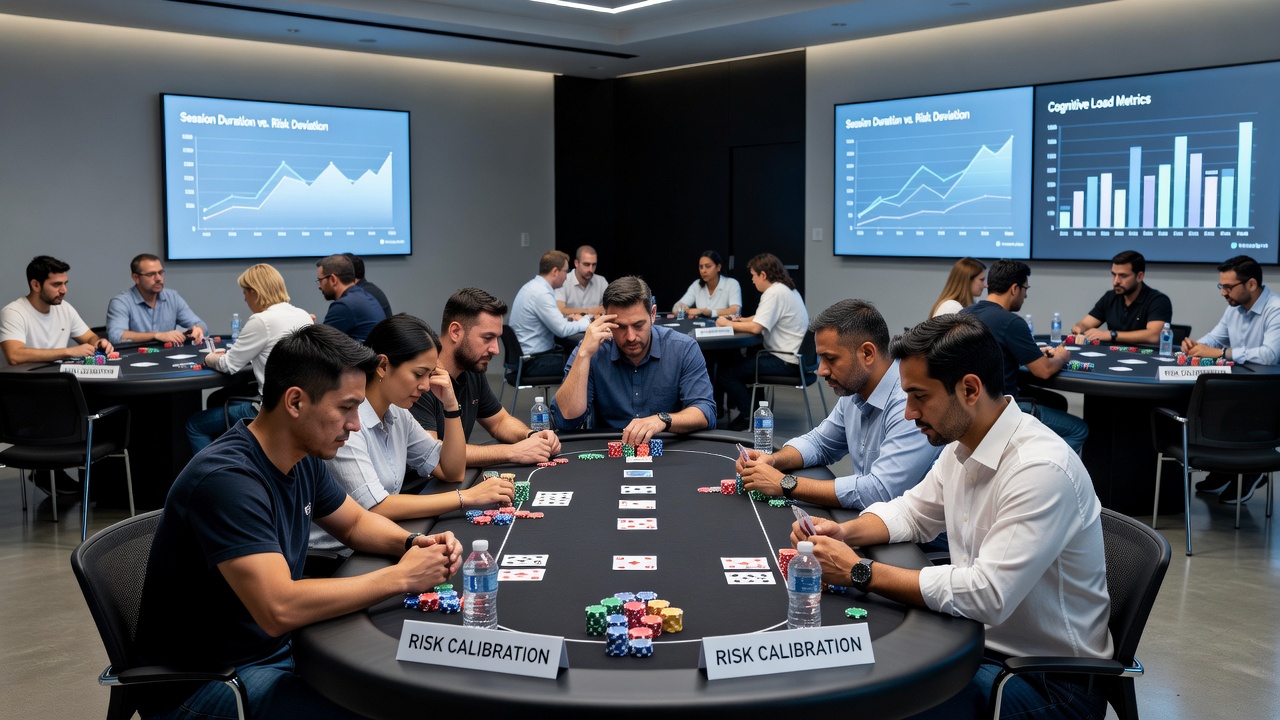
Multi-table poker environments require players to manage simultaneous hands across platforms while continuously adjusting their risk parameters based on stack sizes, opponent tendencies, and pot odds. Risk calibration refers to the process of aligning bet sizing and fold frequencies with accurate probability assessments, and session length emerges as a key variable that influences how precisely those alignments occur. Observers note that extended time at the tables correlates with measurable changes in decision accuracy across both recreational and professional cohorts.
Defining Risk Calibration in Multi-Table Contexts
Researchers describe risk calibration as the degree to which actual betting behavior matches theoretical expected value calculations during concurrent games. In multi-table settings this involves rapid mental switching between independent hand scenarios, each demanding separate equity evaluations and implied odds adjustments. Data from platform analytics indicate that players who maintain tight calibration sustain lower variance over thousands of hands, while deviations appear more frequently as cumulative session time increases.
Short Session Patterns and Decision Stability
Studies tracking online play reveal that sessions lasting under ninety minutes typically preserve consistent risk assessment because cognitive load remains manageable and emotional fatigue stays minimal. Participants in controlled tracking programs showed stable preflop raise frequencies and continuation bet sizing during these shorter windows, with adjustments occurring mainly in response to table dynamics rather than internal state changes. Those who've examined early-session data note that bankroll allocation decisions align closely with predetermined risk tolerances when play begins fresh.
Extended Play and Gradual Calibration Drift
Once sessions stretch beyond three hours, patterns shift as attention fragmentation and subtle tilt indicators accumulate. Hand histories from large datasets demonstrate that bet sizing becomes either overly aggressive in marginal spots or excessively cautious in high-equity situations, both of which represent departures from calibrated baselines. Fatigue compounds because each additional table adds another layer of information processing without corresponding recovery intervals, and this compounds across simultaneous games. What's interesting is how the same players who start with precise three-bet ranges gradually widen or tighten those ranges in ways that no longer track pot odds accurately.
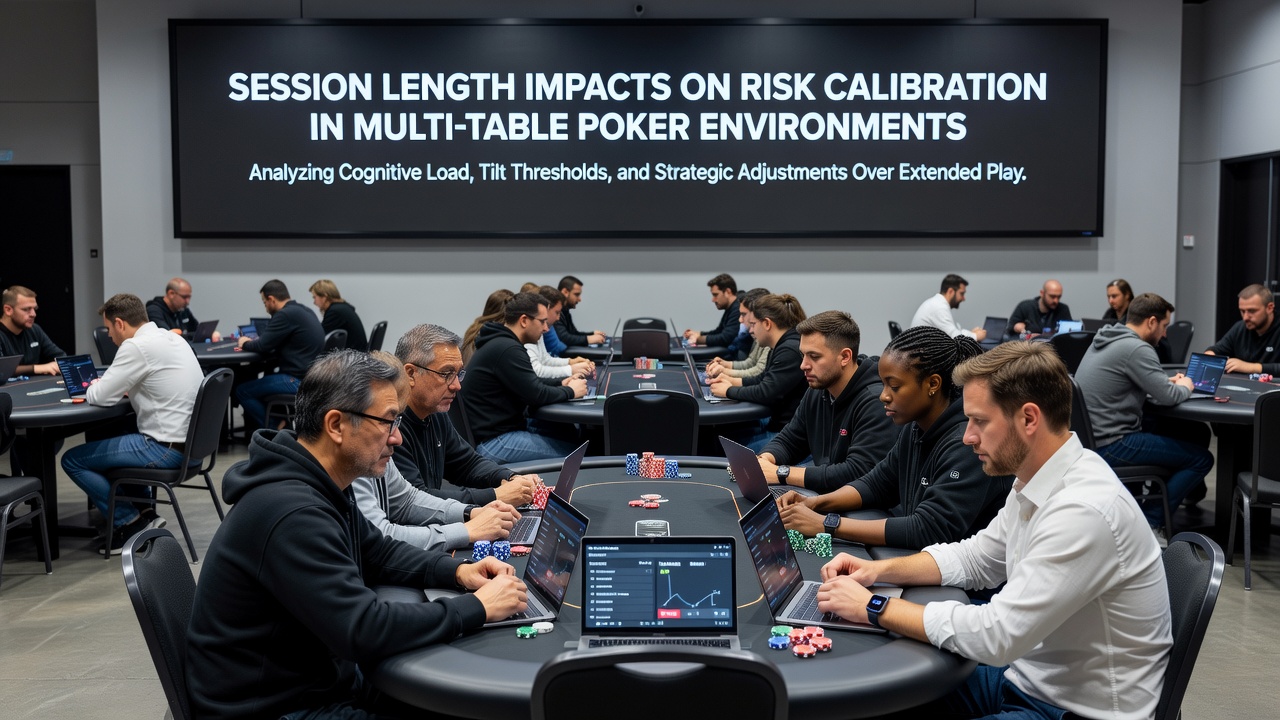
July 2026 figures from multi-platform tracking services showed that average session lengths in multi-table formats had risen to 4.2 hours among regular users, coinciding with a 17 percent increase in documented calibration deviations compared with the prior year. These deviations manifested as larger bet sizes relative to stack depth and reduced fold frequencies against known aggressive opponents. Platform operators have responded by introducing optional session timers that flag when players exceed preset thresholds, though adoption rates remain uneven across different player pools.
Physiological and Cognitive Contributors
Physiological monitoring paired with gameplay logs indicates that heart rate variability decreases and reaction times lengthen after the two-hour mark, directly affecting how quickly players update their mental models of opponent ranges. Eye-tracking research conducted at university laboratories further confirms that visual attention spreads thinner across multiple tables during later stages of long sessions, resulting in missed betting patterns that would normally inform risk adjustments. Experts have observed these effects across both heads-up and full-ring multi-table configurations, suggesting the phenomenon ties more to duration than table count alone.
Practical Adjustments Observed in Player Cohorts
Experienced players sometimes implement scheduled breaks or table reductions once session time crosses certain thresholds to restore calibration accuracy. Software tools that overlay real-time equity calculations see higher usage rates during the middle portions of long sessions, serving as external anchors when internal assessment wanes. Tournament data from major circuits shows that participants who maintain shorter daily playing blocks report fewer instances of suboptimal river decisions, a metric frequently used as a proxy for overall calibration health.
Conclusion
Session length exerts measurable influence on risk calibration within multi-table poker environments through progressive cognitive and physiological changes that alter how players evaluate and respond to betting situations. Platform data and academic monitoring continue to quantify these shifts, providing clearer benchmarks for when interventions become necessary to preserve decision integrity across extended play periods.