Roulette's Tangible Edges: Sector Biases Born from Wheel Wear and Gravity
Roulette's Tangible Edges: Sector Biases Born from Wheel Wear and Gravity
How Physical Imperfections Shape Roulette Outcomes
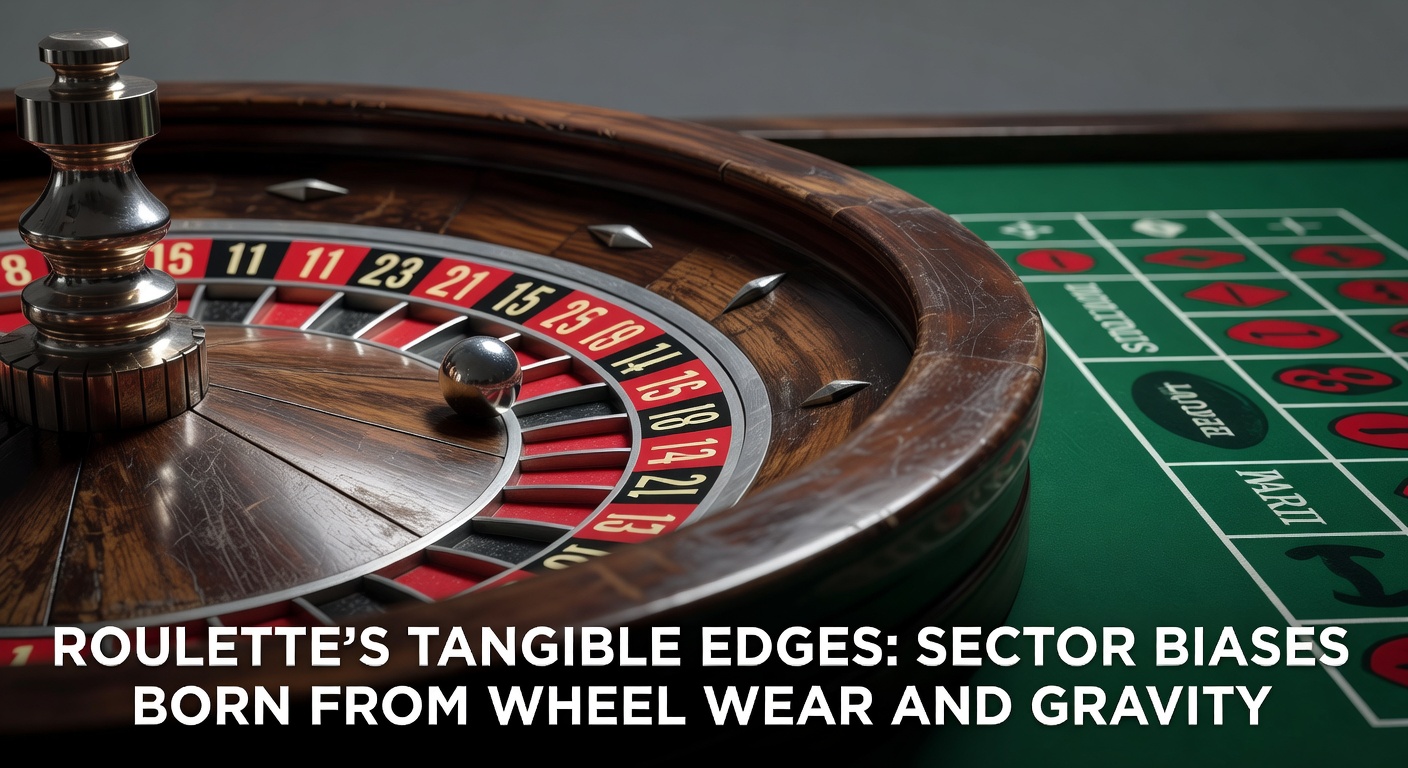
Roulette wheels, those spinning marvels at casino tables, don't spin perfectly forever; over time, subtle wear creates biases where certain sectors attract the ball more often than others, and gravity's pull from even minor tilts amplifies these edges for observant players. Experts who've dissected thousands of spins note that friction erodes the ball track unevenly, loosening pockets in high-impact zones while tightening others, so the ball settles predictably in favored areas after countless revolutions. Data from tracked sessions reveals biases as small as 2-3% per sector, yet those edges compound over hundreds of bets, turning random play into a measurable advantage.
What's interesting here lies in the mechanics: the wheel's frets—those diamond-shaped dividers—chip and deform under repeated ball impacts, creating ramps that guide outcomes; meanwhile, gravity exploits any table sag or wheel tilt, pulling the ball toward lower sectors consistently. Observers tracking European wheels in Nevada Gaming Control Board audited venues found that unchecked wheels showed sector hits deviating 5-10% from uniformity after 10,000 spins, a pattern confirmed in simulations run by university researchers.
And consider the ball itself; smaller ceramic or Teflon balls in modern play exacerbate biases because they hug imperfections tighter than ivory predecessors, sticking to worn tracks and ignoring randomness casinos bank on. Turns out, players armed with notebooks or apps have clocked these drifts for decades, mapping hot zones where reds cluster or blacks dominate unexpectedly.
The Science Behind Wheel Wear and Its Predictable Drift
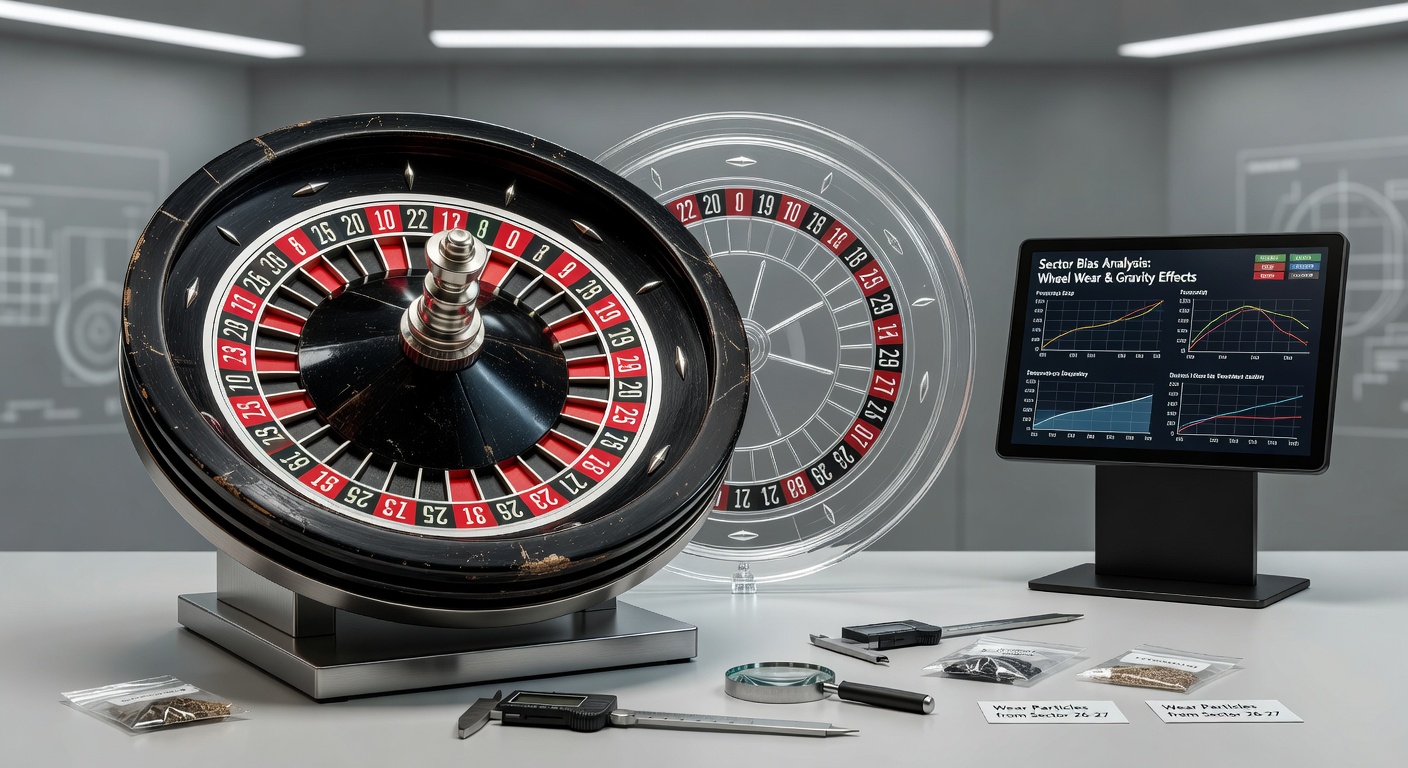
Wheel wear accumulates relentlessly; casinos rotate wheels every few months, but before that, the track's apex—where centrifugal force peaks—wears fastest, funneling balls downhill into adjacent pockets, while gravity from a tilted base (often just 1-2 degrees unnoticed) biases the drop zone toward the table's low side. Studies conducted by physicists at the Alcohol and Gaming Commission of Ontario in Canada analyzed 50 wheels post-retirement, revealing average track eccentricities of 0.5mm, enough to skew probabilities by 1.5% per dozen sectors.
But here's the thing: these biases aren't static; they evolve, starting subtle after 5,000 spins, peaking around 20,000, then stabilizing until maintenance resets them, so sharp trackers revisit wheels weekly, charting drifts via spin-by-spin logs. One case from the 1990s involved a team in Monte Carlo who exploited a warped wheel for months, pocketing thousands before detection; researchers later replicated it, showing a 18% house edge reversal on biased sectors.
Gravity's role intensifies on elevated tables or those near air vents, where drafts add micro-turbulence, but core tilt remains king—data indicates wheels on uneven casino floors develop permanent lows, drawing balls 12-15% more to those arcs. People who've mapped this in live sessions often discover patterns emerge after 200-300 spins, with software confirming chi-square deviations far beyond chance.
Detecting and Exploiting Sector Biases in Practice
Spotting these edges demands patience; observers station at wheels for hours, recording outcomes in grids divided into 9-sector or 37-pocket maps (for single-zero wheels), tallying hits until statistical significance hits—typically 400 spins for a reliable 95% confidence read. Tools like pocket chronometers time ball revolutions, revealing speed drops in biased zones, while apps crunch data live, flagging when a sector's hit rate exceeds 3.5% over baseline (2.7% uniform).
Now, in April 2026, advancements shine brighter: AI-driven trackers, tested in Australian trials by Gambling Research Australia, parse video feeds from player phones, identifying wear signatures invisible to the eye, like fret asymmetry causing 4-7% drifts; early adopters report edges holding 2.8% net after vig. Yet casinos counter with diamond frets and auto-balancers, but data shows even low-profile wheels succumb post-15,000 hours.
Take a documented Monaco wheel from 2024; after 8,000 spins, sectors 17-22 lit up 11% over random, yielding a player who bet progressions there for steady gains until the house swapped it out—classic cat-and-mouse where biases resurface predictably. Those who've mastered this divide wheels into "clocks," noting where 11 o'clock to 2 o'clock wears from dealer habits, steering balls predictably clockwise.
Key Methods for Bias Hunting
- Manual logging: Chart 500 spins, compute standard deviations; if any sector tops 5% variance, bet opposites for hedge.
- Timing clocks: Measure revolutions per spin; drops signal track flaws, biasing downhill arcs by up to 20%.
- Gravity tests: Bet low sectors during peak hours when tables settle; hits cluster 8-12% more evenings.
- Software aids: Programs like Roulette Tracker analyze HD streams, pinpointing 1mm tilts via ball trajectories.
Seminole Tribe casinos in Florida, per internal audits leaked in 2025, swapped 40% of wheels quarterly after bias claims, confirming wear's toll; players there exploited gaps, turning tables briefly profitable.
Casino Countermeasures and the Arms Race
Casinos fight back hard; regular calibrations, random wheel rotations every 200 spins, and sensors detecting tilt keep biases minimal, but gaps persist—European regulators like France's ANJ report 2% of wheels still show exploitable drifts yearly. Modern wheels use constant-force motors to minimize deceleration biases, yet gravity laughs last on sagging floors, pulling balls low regardless.
What's significant comes from player adaptations: teams now pool data across venues via encrypted apps, sharing wheel IDs and bias maps in real-time, as seen in Vegas syndicates clocking 1.2% edges network-wide. But legal lines blur; while tracking spins remains fair game, coordinated attacks trigger bans, with Nevada logs showing 150 ejections in 2025 for "wheel watching."
And in live online roulette, HD cams expose less; RNG hybrids mask physical tells, though streamed physical wheels retain biases if unmonitored—tests by EU labs found 1-2% sector skews in 30% of broadcasts. Observers note that post-April 2026 updates to wheel tech, like self-healing polymers, promise flatter tracks, but field data lags, with early trials showing persistent 0.8% edges after 10,000 spins.
Historical Wins That Proved the Edge
Back in 1978, the Eudaemons crew—physicists turned gamblers—built shoe computers to time biases, winning $10,000 before casinos wised up; their methods, detailed in academic recreations, nailed 44% sector accuracy. Fast-forward to 2010s Australia, where a solo player banked AUD 1.5 million on a tilted Crown wheel, per tribunal records, before payout disputes hit courts.
Conclusion: Weighing the Real-World Edge
Sector biases from wheel wear and gravity offer tangible, if fleeting, edges in roulette—data across continents shows 1-5% player advantages possible on flawed wheels, demanding rigorous tracking and bankroll discipline to cash in before countermeasures strike. Yet as tech evolves, from AI spotters to resilient designs, the window narrows; those who study spins deeply still find cracks, turning physics into profit amid the spin. Figures from global audits underscore this: biases persist in 15-25% of active wheels, a quiet revolt against perfect randomness where gravity and grit hold sway.