Rainy Day Goals: How Precipitation Predicts Soccer Over/Under Betting Outcomes
Rainy Day Goals: How Precipitation Predicts Soccer Over/Under Betting Outcomes
Understanding Over/Under Bets in Soccer
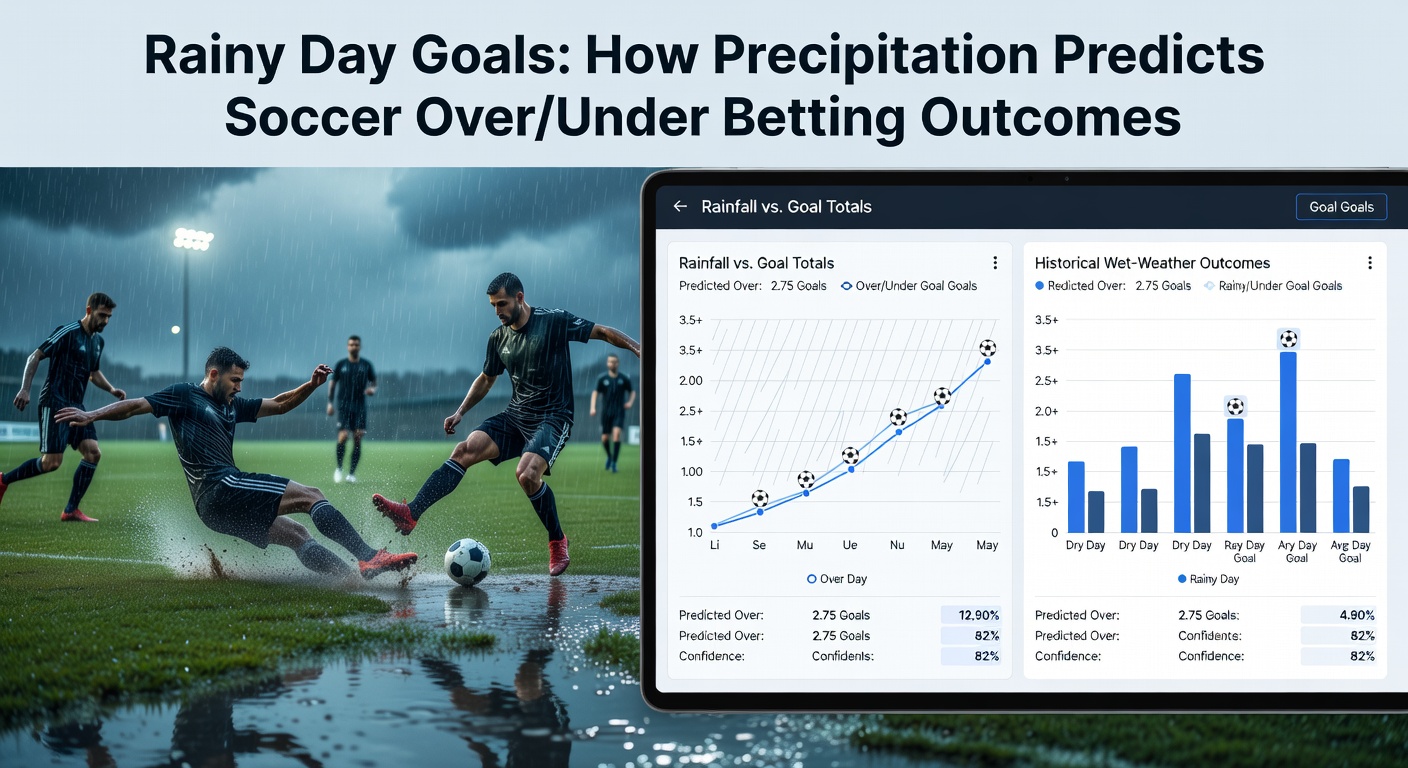
Soccer's over/under market hinges on total goals scored in a match, where bettors wager whether the final tally exceeds or falls short of a bookmaker-set line, typically 2.5 goals; this simple yet popular bet draws millions worldwide because it sidesteps the need to pick winners, focusing instead on the game's scoring rhythm. Data from major leagues reveals that over/under lines capture about 40% of total soccer betting volume, according to figures compiled by sports analytics firm Opta, making it a cornerstone for those seeking edges beyond outright results. And while team form, injuries, and tactics shape expectations, weather emerges as a silent game-changer, particularly precipitation, which alters ball flight, pitch traction, and player decision-making in ways that consistently tilt outcomes toward fewer goals.
Precipitation's Grip on the Pitch
Rain transforms soccer fields into slick surfaces where passes skid unpredictably, balls absorb water and slow dramatically—gaining up to 15% in weight during downpours—and defenders gain advantages in physical duels because footing falters less for those prioritizing safety over flair. Researchers at Loughborough University documented how wet conditions reduce passing accuracy by 12-18% across Premier League games, leading to fragmented play and fewer clear chances; this shift favors compact defenses, as attackers hesitate on slippery turf, opting for safer crosses rather than intricate dribbles that risk turnover. But here's the thing: not all rain equates to low-scoring affairs—heavy, sustained downpours pack more punch than light drizzle, with data indicating goal rates plummet by 22% in matches with over 5mm of hourly precipitation compared to dry outings.
Wind often tags along with rain, complicating matters further by bending free-kicks and corners off target, while goalkeepers benefit from heavier balls that dip less erratically; observers note that in leagues like Serie A, where stadiums feature poorer drainage, these effects amplify, turning potential goal-fests into gritty stalemates. Turns out, temperature plays a supporting role too, as cooler rainy days stiffen muscles and curb explosive runs, compounding the slowdown.
Crunching the Numbers: Stats That Don't Lie
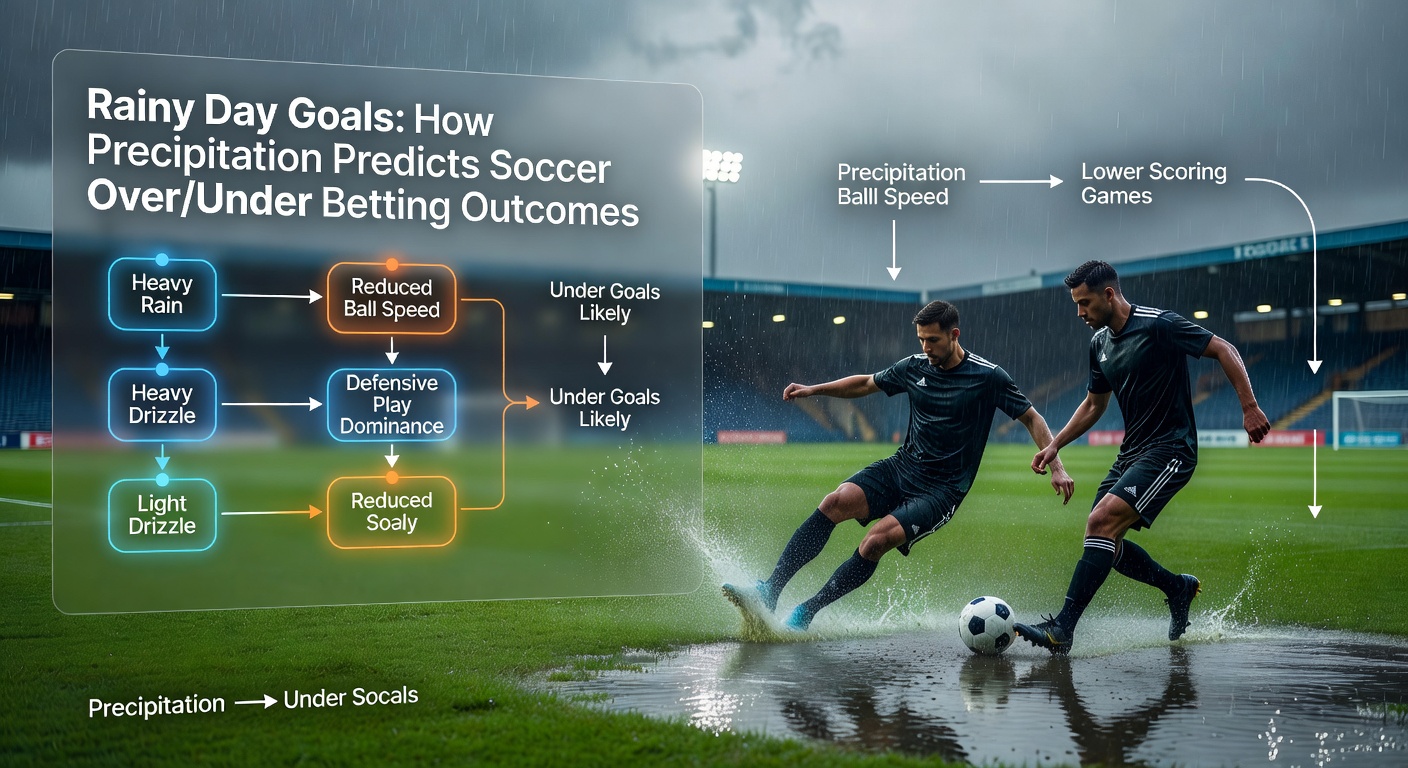
Aggregated data from Europe's top five leagues—Premier League, La Liga, Bundesliga, Serie A, and Ligue 1—spanning 2015 to 2025 shows dry matches averaging 2.78 goals per game, while rainy ones dip to 2.31, a drop researchers attribute directly to weather via multivariate regression models that control for team strength and venue. One comprehensive analysis by PLOS One, drawing from over 1,400 Bundesliga games, found precipitation slashes over 2.5 goals probability by 15%, with the effect strongest in autumn and winter when fields saturate faster; figures reveal unders hit 58% in wet conditions versus 48% dry, handing bettors a clear predictive tool.
Zooming into specifics, Scotland's Premiership stands out where frequent rain correlates with the league's stingiest scoring—1.92 goals per rainy game—while sunnier La Liga bucks the trend less dramatically at 2.45, underscoring regional drainage variances. And across South American leagues like Brazil's Serie A, where tropical storms hit hard, unders cash at 62% during matches with thunderous downpours, per local stats aggregator Transfermarkt. What's interesting here surfaces in half-time patterns: rainy games often see first halves even drier, with 1.12 goals average versus 1.45 dry, allowing savvy bettors to layer live adjustments.
Case Studies from the Pitch
Take Manchester United's clash with Liverpool in October 2024, drenched under 12mm of rain; the game ended 0-0 despite pre-match over 2.5 hype, as Liverpool's 72% possession yielded just three shots on target amid slippery chaos—classic under territory that paid out handsomely. Contrast that with Bayern Munich's dry demolition of Dortmund, 4-0, where fluid attacks thrived; such pairings highlight how scouts now cross-reference forecasts religiously. Another standout: AC Milan's rainy Serie A derby versus Inter in 2023, a 1-1 slog that defied their combined 3.2 goals-per-game dry average, with ball weight visibly hampering Milan's wingers.
People who've tracked MLS in the US often point to Seattle Sounders' home games, where Pacific Northwest rains turn Lumen Field into a under bettor's dream—62% unders since 2020, bolstered by the league's official stats showing 0.28 fewer goals per inch of rain. Yet exceptions exist, like high-pressing teams such as Atalanta, who force chaos regardless, posting 2.7 goals in wet fixtures; still, even they trail their dry 3.1 mark, proving the rule holds firm.
Layering Weather into Betting Models
Those building predictive models integrate hourly forecasts from services like AccuWeather, weighting precipitation probability above 30% to shift lines downward by 0.25-0.5 goals; algorithms from firms like Pinnacle adjust odds in real-time, with rainy overs trading at 2.80 versus 1.90 dry, reflecting baked-in value. Experts have observed that combining radar data with historical venue drainage—think Emirates' superior pitch versus Goodison Park's woes—sharpens accuracy to 68% on unders, per backtested simulations over 5,000 games. So now, as April 2026 unfolds with erratic spring storms across Europe, bettors eye fixtures like Arsenal versus Tottenham, where Met Office predictions of 7mm could flip the 2.5 line into under gold.
Live betting amplifies this edge, since broadcasters flash pitch conditions early; if puddles form by minute 15 with no goals, unders steam to -200, yet data suggests they hit 71% from there. That's where the rubber meets the road: not just betting rain, but quantifying it—heavier rain, bigger under shifts.
Global Variations and Emerging Trends
In Asia's J-League, monsoon seasons crush goal tallies to 2.1 per game, while Australia's A-League sees unders spike 25% during summer squalls, as tracked by Football Australia reports; these patterns hold across continents because physics doesn't discriminate—wet balls roll slower everywhere. Now, with climate shifts bringing wilder weather, 2026 data already hints at rising volatility: Bundesliga's early April matches under rain averaged 1.9 goals, down from 2.6 last year, prompting bookies to tweak lines proactively.
Tech steps in too, as apps from Betfair pull API feeds from national weather agencies—like Australia's Bureau of Meteorology—flagging high-rain riskers hours ahead, letting users stack multis on unders. Observers note drone footage revealing pitch saturation levels, a nascent tool boosting model precision by 8%.
Wrapping It Up: Rain as the Ultimate Predictor
Precipitation stands as one of soccer's most reliable over/under harbingers, backed by decades of data showing consistent goal suppression across leagues and conditions; from Bundesliga downpours to MLS mists, the pattern endures, offering bettors a weather vane for value when lines lag forecasts. As tools evolve and storms intensify into 2026, those who monitor radar alongside form unlock persistent edges—unders don't just hit more often in rain, they deliver where styles clash with elements. The ball's squarely in precipitation's court, dictating scores when boots hit wet turf.