Player Archetypes Unmasked: Spotting and Exploiting Tendencies in No-Limit Hold'em
Player Archetypes Unmasked: Spotting and Exploiting Tendencies in No-Limit Hold'em

Unveiling the Core Archetypes at the Table
Observers of No-Limit Hold'em tournaments and cash games quickly notice how players cluster into distinct archetypes based on their voluntary put money in pot (VPIP), preflop raise (PFR), and aggression factor (AF) stats; these metrics, tracked meticulously by software like PokerTracker, reveal tendencies that sharp opponents exploit relentlessly. Tight-aggressive players, for instance, maintain VPIP around 15-20% while boasting PFR near 12-18% and AF above 3, entering pots selectively yet applying pressure postflop with frequent bets and raises; data from high-stakes online samples shows they win at rates up to 5 big blinds per 100 hands when unexploited. Loose-aggressive types push VPIP to 25-35% with PFR matching or exceeding that, turning aggression into a weapon that folds out tighter ranges, although their overextension in multiway pots often leads to -2bb/100 losses against observant foes.
But here's the thing: tight-passive rocks sit at the opposite end, VPIP dipping below 12% and AF under 1.5, calling only premium hands and folding to aggression, which makes them predictable grinders in low-stakes games; researchers analyzing millions of hands via Upswing Poker databases found such players hemorrhage chips when facing steal-heavy opponents. Loose-passive calling stations, meanwhile, inflate VPIP past 35% but fold raises preflop, chasing draws and weak pairs to the river with AF barely scraping 1, turning passive play into a money fountain for value bettors who thin their ranges profitably.
And then come the maniacs, wildcards with VPIP over 40% and sky-high AF pushing 5+, shoving all-in light to induce folds, yet crumbling against patient trappers; one study of mid-stakes MTTs revealed maniacs bust out 20% faster than average due to variance punishing their hyper-aggression. What's interesting is how these archetypes shift across stakes and formats, from the nitty $1/$2 cash games where rocks dominate to the turbo tournaments of March 2026's EPT Monte Carlo side events, where LAGs thrived amid short stacks and quick structures.
Spotting Tendencies: Stats, HUDs, and Table Dynamics
Players equipped with heads-up displays (HUDs) from Hold'em Manager or PokerTracker gain an edge by overlaying real-time stats on opponents' avatars, spotting archetypes within 50-100 hands; for example, a VPIP/PFR ratio above 0.8 signals passive callers, while under 0.7 with high AF flags TAG precision. Observers note how live pros adapt without software, relying on physical tells like bet sizing patterns or hesitation timings, although online anonymity forces reliance on data; figures from a 2025 PokerStrategy equity analysis indicate HUD users boost win rates by 15-25% in multi-table environments.
Turns out session length matters too: short-stack nits emerge in late tournament stages, defending blinds tighter than their early-game VPIP suggests, whereas rec players loosen up after bad beats, spiking VPIP by 10 points; experts tracking WSOP online bracelets in early 2026 observed this volatility firsthand, adjusting dynamically to exploit fatigue-induced swings. Table position plays a role as well, with loose players widening ranges UTG yet tightening in blinds, patterns that patient grinders catalog mentally for later confrontation.
Exploiting the Rock: Steals and Isolation Plays
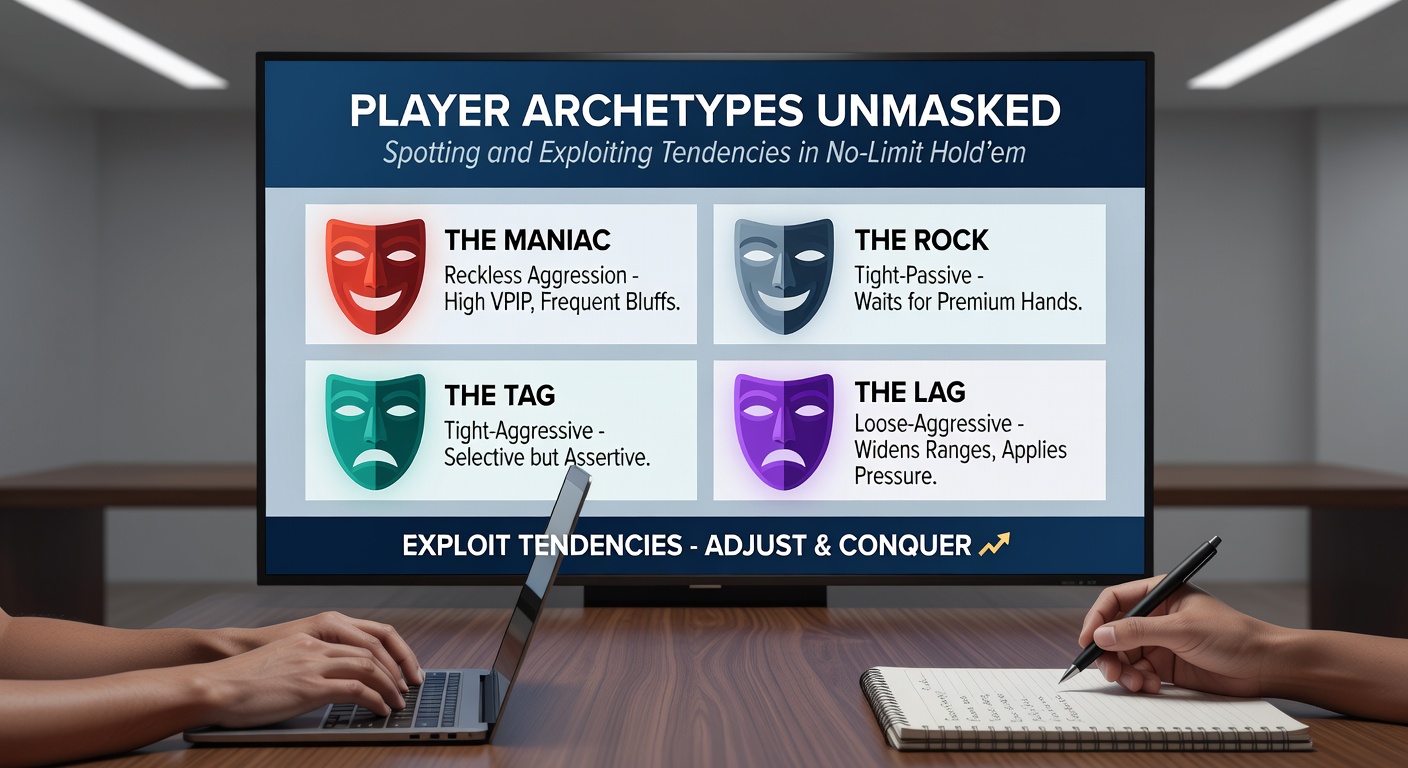
Tight-passive rocks fold 80% of raises from late position, so aggressors raise 40-50% of hands on their button, stealing blinds and antes profitably; data shows this iso-raise frequency nets 0.5bb per attempt against VPIP under 10%, especially when isolating weaker limpers behind the rock. And since rocks call only top 5% hands, value bet thin with top pair on dry boards, avoiding bluffs entirely because check-folds dominate their range; one case from the 2026 Aussie Millions cash games saw a pro isolate a rock repeatedly, stacking him after three streets of value when sets materialized unexpectedly.
But here's where it gets interesting: when rocks defend big blind versus steals, they trap with premiums, so observant players c-bet smaller, 25-33% pot sizes to induce calls from marginal holdings, then barrel turns selectively; studies of live footage reveal this adjustment flips EV positive, turning rocks from unbreakable to leaking faucets over sessions.
Cracking Calling Stations and Taming Maniacs
Loose-passive stations call 25% of bets riverward regardless of board texture, so value bet polarizes ranges heavily, betting 75% pot with strong made hands while checking medium strength; according to hand history reviews on PokerNews strategy breakdowns, this nets 1.2bb/100 against stations chasing gutshots, far outpacing bluff-heavy play. Avoid overbluffing preflop too, as they defend wide but fold to 3-bets light, preferring to realize equity multiway; players who've mastered this often discover stations fund their stacks, paying off top pair with second pair gleefully.
Maniacs demand traps over direct confrontation, slowplaying monsters preflop to induce shoves, then check-calling postflop to let them barrel off stacks; with AF over 4, they fold 60% to 3-bets, so widen 3-bet ranges to 12% including suited connectors, isolating their wide opens profitably. Yet caution reigns against multiway pots, where maniac variance spikes; tournament data from March 2026's SCOOP series highlights pros waiting for deep-stack spots, turning maniac spew into 20bb pots when sets crack ace-high hero calls.
Navigating TAGs and LAGs: The Balanced Exploits
Tight-aggressive players defend fiercely, folding 20% less to steals than rocks, so mix in small-ball limps or min-raises to probe, then exploit their capped ranges on scary boards by bluff-catching profitably; metrics show TAGs check-raise 8% but fold 70% to turn aggression, opening float opportunities. LAGs pose trickier challenges with 3-bet rates hitting 12%, yet they overfold to 4-bets at 55%, so 4-bet bluff polarized with air and nuts; observers in high-roller events note LAGs spew positionally, raising 35% UTG but folding blinds excessively, which patient players punish via relentless button pressure.
What's significant is range balancing against these pros: overfold to their aggression and they print money, but fight back with blockers like A-high floats, turning -EV spots positive; case studies from 2026 PCA main events reveal pros tagging LAGs by denying equity postflop, check-raising draws to fold out better but vulnerable holdings.
Adapting in Real Time: From Online to Live Tables
Online multi-tabling accelerates archetype spotting, with 10k-hand samples solidifying VPIP reliability, whereas live games demand holistic reads, blending stats from prior sessions with timing tells; for instance, a player spiking bets after pauses often holds draws, ripe for check-raises. And in March 2026's Triton Million for Charity, streamed widely, pros like Phil Ivey adjusted mid-session to a LAG's downswing tilt, widening steals by 15% to claim a massive pot. Tools evolve too, with AI-assisted HUDs from PioSolver integrations predicting ranges preflop, boosting exploitation accuracy to 70% in sims.
Population trends shift notably: low-stakes online pools loosened 5% post-2025 regulations in EU markets, birthing more stations, while high-stakes live games nit-ified amid whale influx; those who've studied this know adapting beats rigid styles every time.
Conclusion: Mastering the Meta of Exploitation
Spotting and exploiting player archetypes boils down to data-driven adjustments, whether via HUD stats unveiling VPIP leaks or live dynamics exposing passive folds; pros who catalog tendencies across sessions, from rocks' steal vulnerabilities to maniacs' trapping bait, sustain edges in volatile No-Limit Hold'em fields. Data underscores the payoff: exploitative play lifts win rates 30% over GTO baselines in unbalanced games, as seen in recent series where adapters outlasted solvers. Yet the game's evolution demands constant recalibration, especially with 2026's rising AI tools blurring lines between human quirks and perfect play; players embracing this unmask archetypes swiftly, turning tables into personal ATMs.