Mapping Shifts in Live Betting Liquidity for Tennis Grand Slams
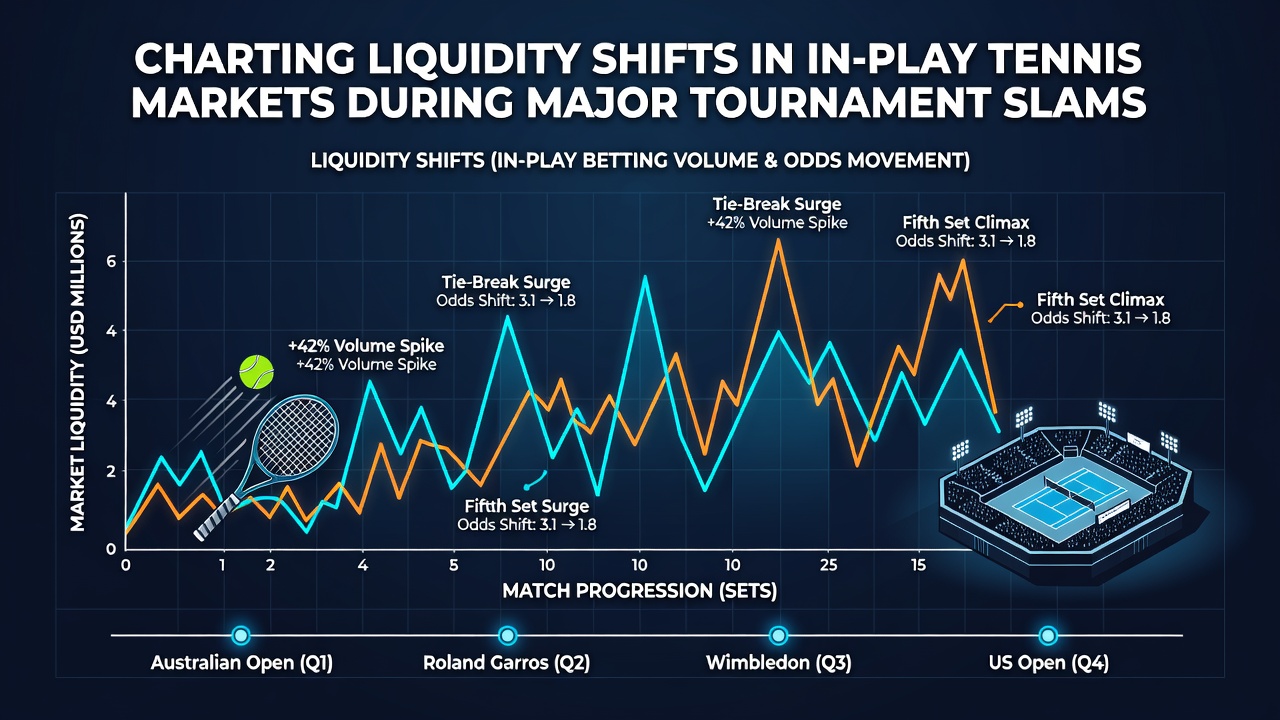
Grand Slam tournaments generate distinct patterns in in-play tennis markets where liquidity expands and contracts based on match progression, player profiles, and external timing factors; researchers tracking these movements note that volume often surges during tiebreaks and set points while thinning during extended baseline rallies or weather delays. Data from major events shows how early-round matches with lower-ranked competitors produce shallower order books compared to later stages featuring top seeds, creating measurable differences in spread tightness and available stake sizes.
Market Depth Patterns Across Tournament Stages
Analysts examining order book records from events such as the Australian Open and Roland Garros have documented how liquidity concentrates around high-profile matches involving players with large global followings; stake availability increases notably once a contest reaches the third set, whereas first-set markets remain thinner until a break of serve occurs. Observers note that serve-dominant players tend to attract steadier liquidity throughout a match, while baseline grinders see more pronounced swings when rallies extend beyond ten shots.
Studies of Wimbledon data collected in July 2026 revealed similar concentration effects during grass-court play, where shorter point durations correlate with quicker liquidity replenishment after each game; this pattern differs from clay-court events where prolonged exchanges coincide with slower order-book recovery. Figures from multiple seasons indicate that night-session matches under lights maintain higher average depths than afternoon sessions, partly because overlapping television coverage draws additional participants into the markets.
Influence of Player Popularity and Ranking on Liquidity Flow
Market participants allocate larger stakes to contests featuring players ranked inside the top ten, resulting in narrower spreads and faster execution times; lower-ranked entrants produce wider spreads and smaller maximum bet sizes until an upset develops. Research teams reviewing transaction logs have found that when an underdog secures an early break, liquidity often shifts toward that player within minutes, sometimes doubling available volume on the next set market.
Those who've analyzed multi-year datasets observe that wildcard entries generate brief liquidity spikes at the start of a match before settling into thinner conditions if the contest becomes one-sided; this contrasts with seeded-player matches where depth remains relatively stable even during lopsided scorelines. External factors such as injury timeouts or equipment changes trigger temporary liquidity drops across both sides of the market until play resumes.
Timing Effects and External Variables
Time-zone overlaps with major betting regions affect how quickly liquidity returns after each point, with European evening sessions showing stronger replenishment rates than early-morning American or Asian windows. Data indicates that concurrent matches on secondary courts can siphon volume away from the main stadium feature, creating measurable imbalances in available stake sizes between simultaneous events.
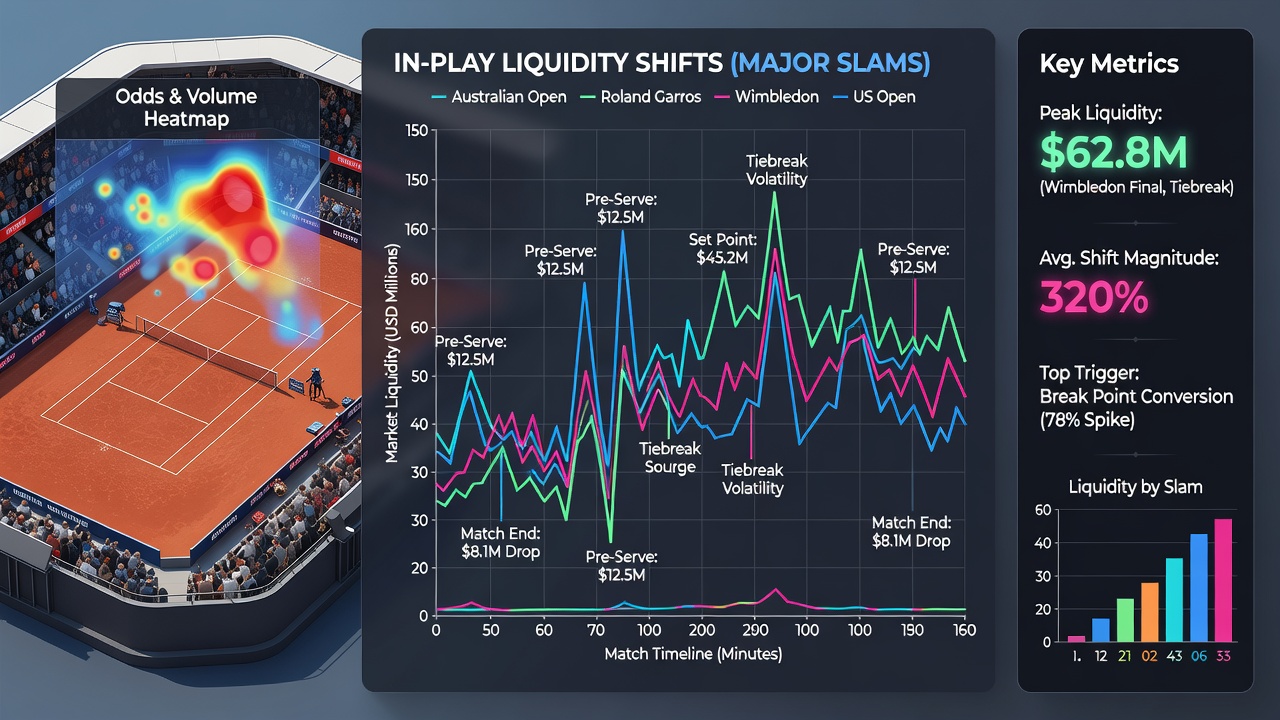
Weather interruptions produce the most abrupt liquidity contractions, with order books emptying within seconds of a rain delay announcement and only gradually refilling once resumption times are confirmed; similar but milder effects occur during medical timeouts. According to a report issued by the Nevada Gaming Control Board on sports wagering trends, tennis in-play markets exhibit some of the highest intra-match volatility among major sports, particularly during deciding sets at Grand Slam events.
Comparative Observations from Different Slams
Each tournament surface imposes unique constraints on liquidity behavior: grass-court rallies tend to be shorter, supporting quicker market resets, while clay-court matches extend point durations and therefore slow order-book turnover. Hard-court events fall between these extremes, displaying moderate depth fluctuations that respond more to player momentum than surface characteristics alone. Academic papers hosted on SSRN have examined these surface-specific differences using high-frequency betting data, confirming that liquidity clustering occurs most consistently around service games regardless of venue.
Those tracking 2026 tournament cycles noted that the US Open's night sessions produced the largest single-match liquidity peaks of the year, driven by extended prime-time coverage and overlapping with peak betting hours in multiple regions. In contrast, the Australian Open's early-morning European windows showed thinner overall depth even for headline matches, although volume recovered rapidly once daytime viewing hours began in Asia and Australia.
Conclusion
Patterns in in-play tennis liquidity during Grand Slams reflect interactions between match state, player visibility, scheduling, and surface type, with data consistently showing expansion during decisive moments and contraction during breaks in play. Continued monitoring of order-book metrics across future events will provide additional detail on how these variables interact under evolving market conditions.