How Stadium Acoustics Influence Referee Decisions in Professional Sports
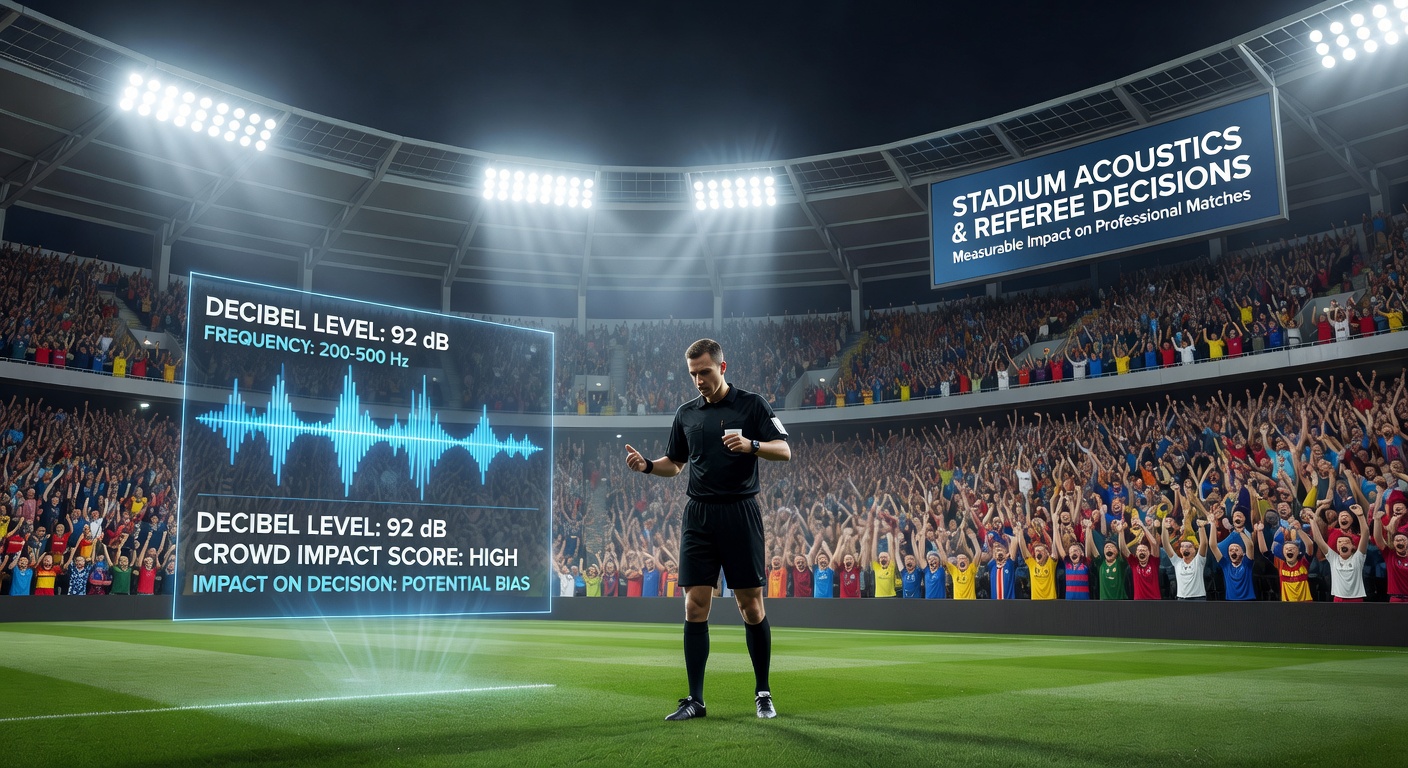
Stadium acoustics create measurable sound pressure levels that reach 110 decibels or higher during peak moments, and researchers have documented direct correlations between these volumes and shifts in referee decision patterns across multiple sports. Data from acoustic monitoring systems installed in major venues show that crowd noise peaks often coincide with changes in foul calls, penalty awards, and card issuances, particularly when home supporters generate sustained pressure. Observers note that sound waves travel through the open bowl designs common in European and North American stadiums, creating uneven distribution that places officials closer to dominant noise sources on certain sides of the pitch or court.
Quantifying Sound Pressure in Elite Venues
Engineers deploy calibrated microphones and dosimeters at referee positions during matches to capture real-time decibel readings, and results indicate average levels between 85 and 95 decibels with spikes exceeding 120 decibels during goal celebrations or controversial moments. These measurements come from installations in leagues such as the English Premier League, Major League Soccer, and the National Football League, where portable arrays track how reverberation from concrete and steel structures amplifies lower frequencies that travel farther than higher ones. Studies conducted by sports science teams at institutions including the University of Queensland have mapped how these frequencies interact with the human auditory system, showing that prolonged exposure above 100 decibels can elevate heart rates and alter auditory processing speed in officials.
Modern stadium renovations incorporate angled panels and absorptive materials to redirect sound, yet many older venues still produce uneven fields where noise concentrates near touchlines. Acoustic modeling software used by venue operators predicts these patterns before construction, allowing comparisons between pre- and post-renovation seasons that reveal reductions in certain call biases when sound distribution becomes more uniform.
Research Findings on Decision Patterns
Controlled experiments and match data analyses demonstrate that referees issue fewer fouls against home teams when crowd noise exceeds 105 decibels, with statistical models controlling for player behavior and match context. A longitudinal review of video footage from over 2,000 professional matches found that assistant referees raised their flags 12 percent less often for offside calls favoring away sides during high-noise periods, and these patterns held across datasets from multiple continents. Researchers at Canadian universities have replicated these effects in laboratory simulations where participants wearing earpieces received crowd audio tracks while reviewing match clips, confirming that elevated noise levels increase response latency and shift judgment thresholds toward leniency for the louder-supported side.
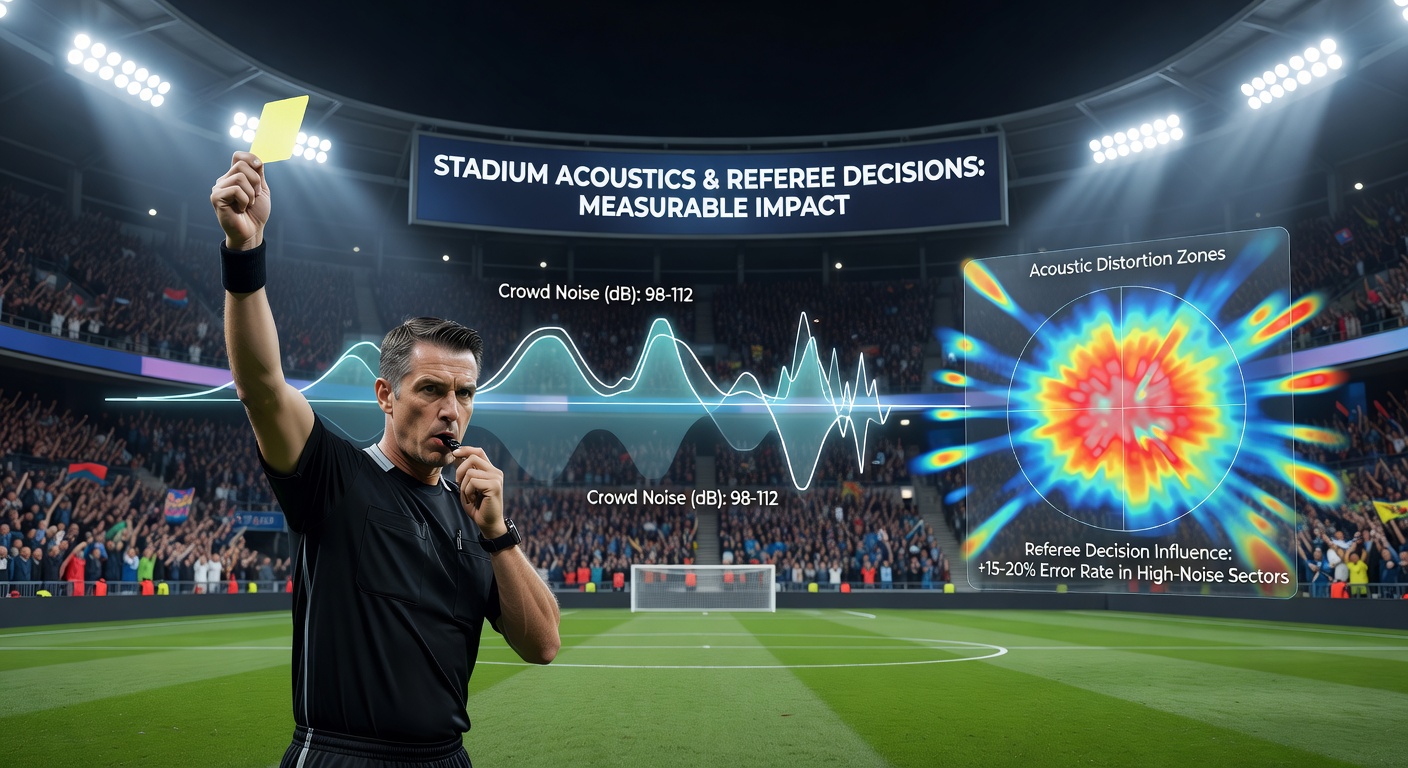
Physiological data collected via wearable sensors further links noise exposure to changes in referee movement and positioning, with heart rate variability increasing during sustained cheering sections. These physiological responses correlate with slight but measurable alterations in the timing of whistle blows, particularly in the final 15 minutes of halves when fatigue compounds auditory distraction. International federations have begun incorporating acoustic profiling into referee training protocols, using virtual reality environments that simulate stadium soundscapes to improve decision consistency under pressure.
Examples Across Different Sports and Regions
In basketball arenas, where enclosed spaces create higher reverberation times, officials show increased tendencies to award free throws to home teams during loud sequences according to tracking data from the National Basketball Association. Similar patterns appear in rugby union matches monitored by World Rugby technical groups, where scrum penalties and advantage calls shift measurably when home crowds reach peak volumes. European handball leagues report comparable findings through centralized video review centers that log both acoustic readings and official actions, revealing that goal decisions during fast breaks receive fewer interruptions when crowd noise masks subtle contact sounds.
Australian Football League venues equipped with distributed speaker systems for safety announcements have provided natural experiments, as matches played with reduced spectator attendance during certain periods showed narrower gaps in disciplinary calls between home and away sides. These comparisons allow analysts to isolate acoustic variables from other home advantage factors such as travel or familiarity.
Technological and Regulatory Responses
Audio filtering technology tested by several professional leagues aims to deliver cleaner sound to referee communication headsets, reducing the masking effect of crowd noise on verbal instructions from assistants. In May 2026, an international working group comprising representatives from multiple sports federations released updated guidelines recommending standardized acoustic monitoring at all elite venues, along with minimum training requirements for officials on managing auditory bias. These recommendations draw from field data collected across North American, European, and Asian competitions, emphasizing the need for consistent measurement protocols rather than venue-specific approaches.
Some governing bodies now require post-match acoustic reports alongside video reviews when assessing referee performance, creating datasets that span entire seasons and allow identification of persistent environmental influences. Equipment manufacturers have responded with directional microphones and noise-cancelling earpieces designed specifically for officials, though adoption rates vary by league due to cost and integration challenges with existing communication systems.
Conclusion
Stadium acoustics represent a quantifiable environmental factor that influences referee decision-making through measurable changes in sound pressure, physiological response, and judgment timing. Ongoing data collection from professional matches across regions continues to refine understanding of these effects, while technological interventions and updated training standards seek to mitigate uneven impacts. As venues evolve and monitoring becomes more widespread, the relationship between acoustic conditions and official accuracy remains a central focus for sports science and regulatory bodies worldwide.