Combat Sports Betting Exchanges: Liquidity Patterns and Arbitrage Mechanics
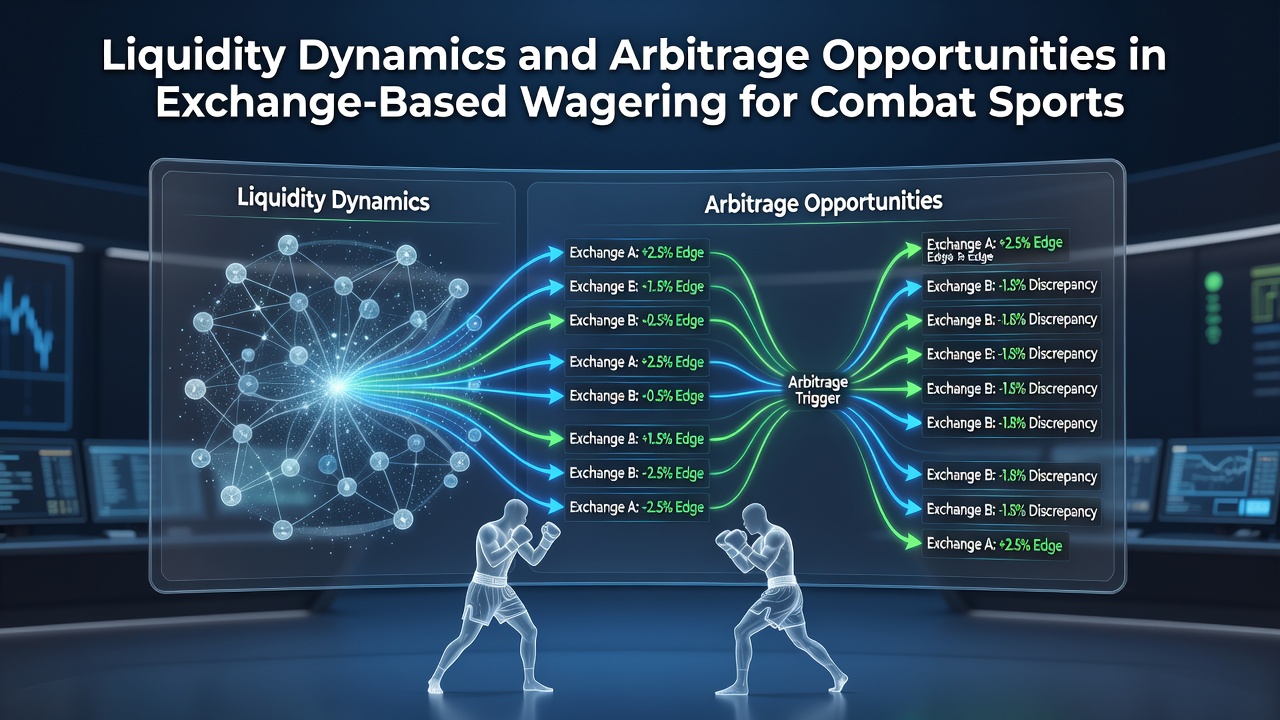
Exchange-based wagering operates differently from traditional bookmaking because participants set their own odds and match directly against one another, creating a marketplace where liquidity determines how quickly and at what price bets can execute. In combat sports such as mixed martial arts and boxing, event schedules, fighter popularity, and regional interest drive varying levels of market depth throughout the year. Data from regulatory filings show that combat sports markets often experience sharp liquidity spikes in the 48 hours before major cards, then contract rapidly once the event concludes.
Market Depth in MMA and Boxing Exchanges
Liquidity in these markets depends on the number of active users willing to take both sides of a proposition and the total stake volume available at each price level. Researchers at the University of Nevada, Reno documented that MMA title fights typically attract three to four times the matched volume of undercard bouts within the same event, because casual participants concentrate their activity on headline matchups. Boxing events follow a similar pattern, yet regional title fights outside major promotions sometimes sustain steadier liquidity across multiple days when local betting communities remain engaged.
June 2026 saw several high-profile international cards that illustrated these dynamics, with liquidity concentrated in the final trading window before weigh-ins and then dispersing once results became official. Observers tracking order book data note that back-lay spreads on popular fighters narrowed to single-tick margins during peak hours, while undercard selections maintained wider spreads even when overall event interest remained high.
Factors Influencing Liquidity Flow
Time zones, promotional marketing, and injury news all shift where capital enters and exits exchange markets. When a fighter withdraws close to fight week, liquidity often migrates toward replacement bouts or method-of-victory markets rather than disappearing entirely. Studies published in the Journal of Gambling Studies indicate that social media sentiment correlates with increased matched stakes in the 24 hours following official announcements, although the relationship weakens once the opening bell sounds.
Payment processing rules and jurisdictional access further segment available capital. Users in regions with restricted banking options contribute less consistent volume, which leaves certain exchanges thinner during overnight trading sessions. Those monitoring these patterns report that Australian and Canadian participants frequently provide counterbalancing liquidity when European and American markets slow, creating staggered activity cycles across global platforms.
Arbitrage Mechanics Across Multiple Exchanges
Arbitrage emerges when identical outcomes display different implied probabilities on separate exchanges, allowing a participant to back one side at one venue while laying the opposing side elsewhere for a locked margin. Because combat sports odds fluctuate with late news and public sentiment, price discrepancies appear more frequently than in slower-moving sports. One documented case involved a welterweight championship bout where the same fighter traded at 1.92 on one platform and 2.05 on another for several hours, creating a cross-market opportunity before prices converged.
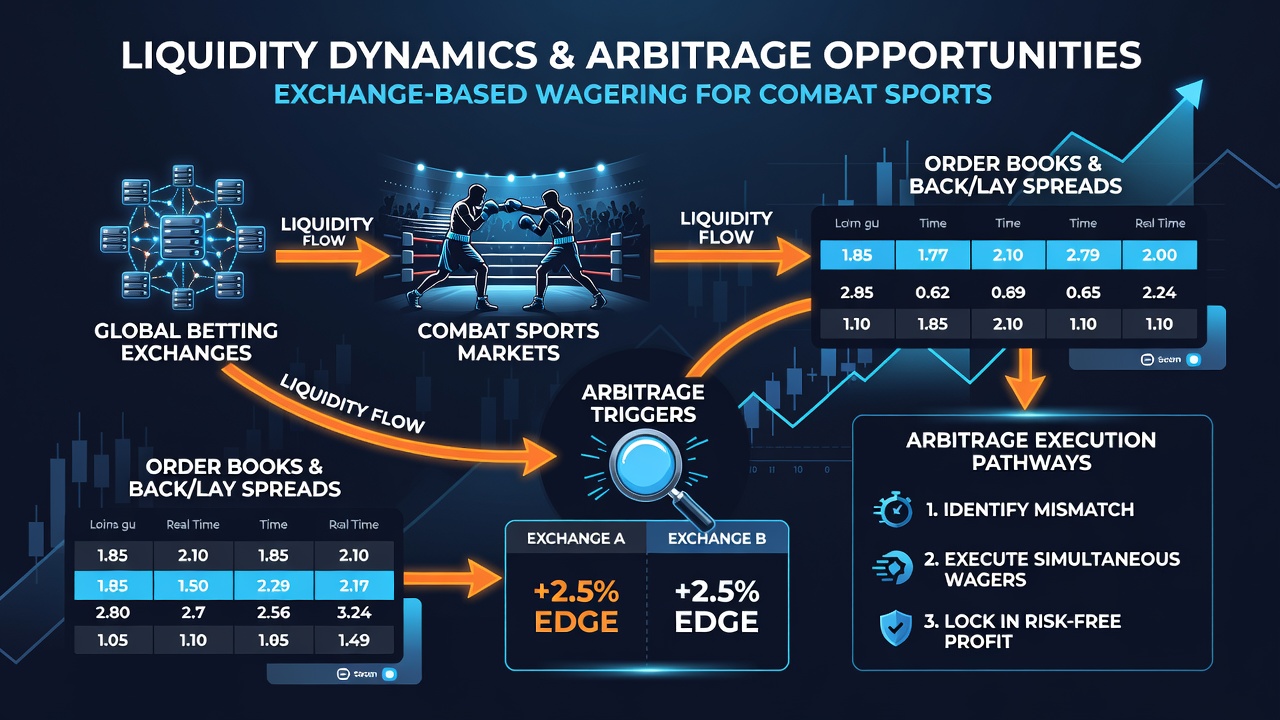
Execution requires simultaneous placement of opposing positions while accounting for commission rates and available stake limits at each price. Data compiled by the Nevada Gaming Control Board shows that high-volume exchange users in regulated markets often maintain accounts across multiple jurisdictions to capture these fleeting differences, though settlement delays and currency conversion costs can erode small margins. Automated monitoring tools have reduced the time window for manual intervention, pushing participants toward faster decision frameworks.
Practical Constraints and Risk Controls
Exchange operators impose maximum stake thresholds that can prevent full position sizing when liquidity sits below required levels. In such cases, partial fills leave residual exposure that must be managed through subsequent trades or accepted as incomplete hedges. Historical records from major platforms reveal that arbitrage attempts on undercard fights fail more often due to insufficient opposing volume than because of price convergence alone.
Regulatory reporting requirements in multiple jurisdictions now mandate disclosure of matched betting activity above certain thresholds, which has prompted some participants to fragment positions across accounts. Those tracking compliance data note that this fragmentation can itself reduce effective liquidity in niche markets where fewer counterparties remain active.
Conclusion
Exchange-based wagering for combat sports continues to reflect the interplay between concentrated event-driven volume and dispersed global participation, with liquidity patterns shaped by scheduling, promotional cycles, and regulatory boundaries. Arbitrage opportunities arise primarily from temporary pricing inconsistencies across platforms, yet successful execution depends on available depth, commission structures, and settlement reliability. Figures released in mid-2026 confirm that combat sports remain among the more volatile exchange categories, sustaining measurable cross-market activity even as overall participation rates stabilize in mature jurisdictions.