Altitude Effects on Endurance Athletes: How Elevation Shapes Outcomes in Marathon and Cycling Wagers
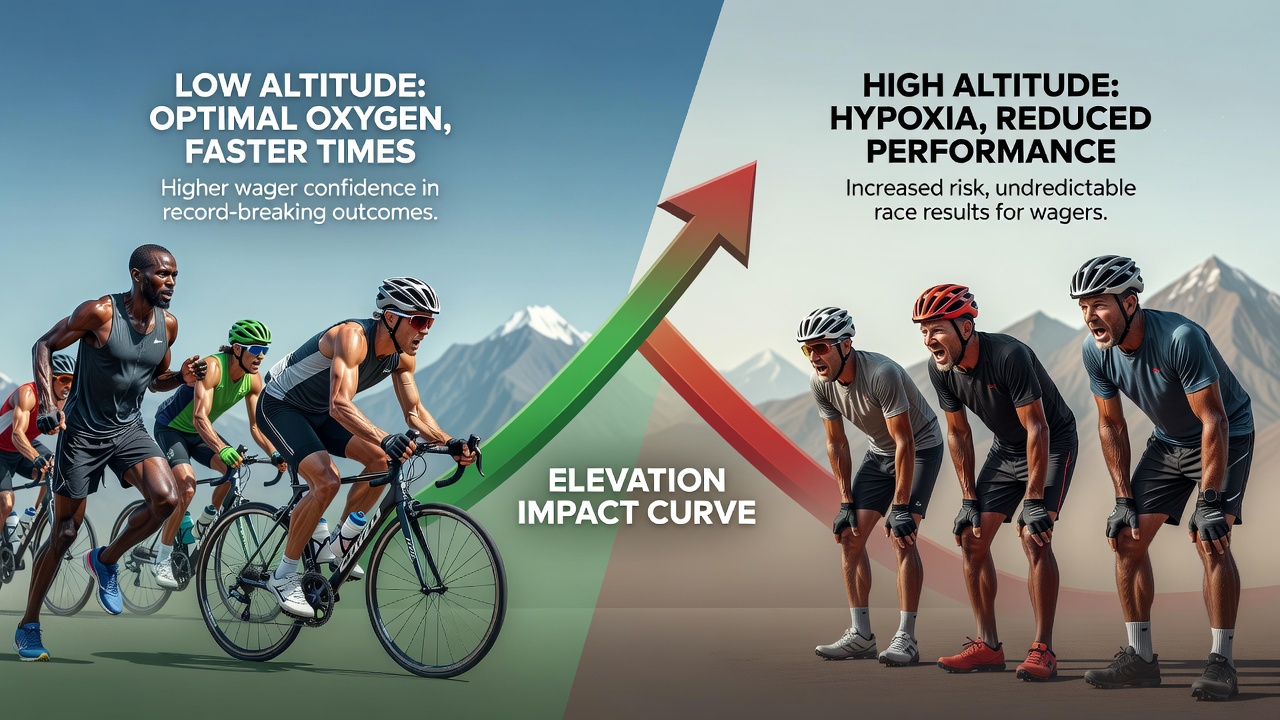
Endurance athletes face distinct physiological challenges when competing at elevation, where reduced oxygen availability directly influences performance metrics in marathons and cycling events, and those shifts in turn alter historical patterns that shape wagering markets on race results. Lower air pressure at higher altitudes decreases the partial pressure of oxygen, which limits aerobic capacity and forces the body to rely more on anaerobic systems during sustained efforts. Research from institutions such as the University of Colorado has quantified these effects through controlled trials showing measurable declines in VO2 max beginning around 1,500 meters above sea level.
Physiological Responses to Elevation
Acute exposure triggers immediate responses including elevated heart rates and faster breathing to compensate for thinner air, while longer acclimatization periods of two to three weeks prompt increases in red blood cell production that partially offset the deficit. Studies indicate that even after acclimatization, elite marathon runners experience average time increases of three to five percent at altitudes above 2,000 meters compared with sea-level performances. Cyclists encounter similar constraints during prolonged climbs, where sustained power output drops because muscle cells receive less oxygen for mitochondrial energy production.
What's interesting is how individual variation plays a role, since some athletes with higher baseline hemoglobin levels adapt more efficiently while others suffer greater fatigue. Data collected during events like the Leadville Trail 100 and stages of the Tour de France in the Alps reveal consistent patterns where favorites from lower elevations post slower splits on uphill sections. Observers note that these physiological limits create predictable deviations from sea-level expectations, and betting markets incorporate such trends when setting odds for high-altitude races scheduled in summer months.
Marathon Performance at Elevation
Marathons held at elevation, such as those in Denver or Mexico City, produce slower overall finishing times because the reduced oxygen forces runners to maintain lower intensities to avoid early lactate accumulation. A 2024 analysis of results from multiple high-altitude races showed that world-record pace becomes unattainable above 1,800 meters, with the gap widening as distance increases. Runners who train at altitude for extended periods gain some advantage through improved economy, yet even they record times that reflect the environmental penalty.
June 2026 data releases from race organizers highlighted how elevation influenced splits during key events, confirming that mid-race surges become riskier strategies when oxygen debt accumulates faster. Historical records demonstrate that athletes from East African highland regions often maintain relative advantages due to lifelong adaptation, which wagering platforms factor into pre-race assessments for international fields.
Cycling Dynamics and Mountain Stages
Cycling events amplify altitude effects during multi-hour mountain stages because repeated climbs compound oxygen debt across successive ascents. Power meters used in professional pelotons record wattage reductions of eight to twelve percent at 2,500 meters compared with equivalent efforts at sea level, according to measurements taken during Grand Tour preparations. Teams adjust pacing strategies accordingly, favoring steady efforts over aggressive attacks that could deplete glycogen stores prematurely.
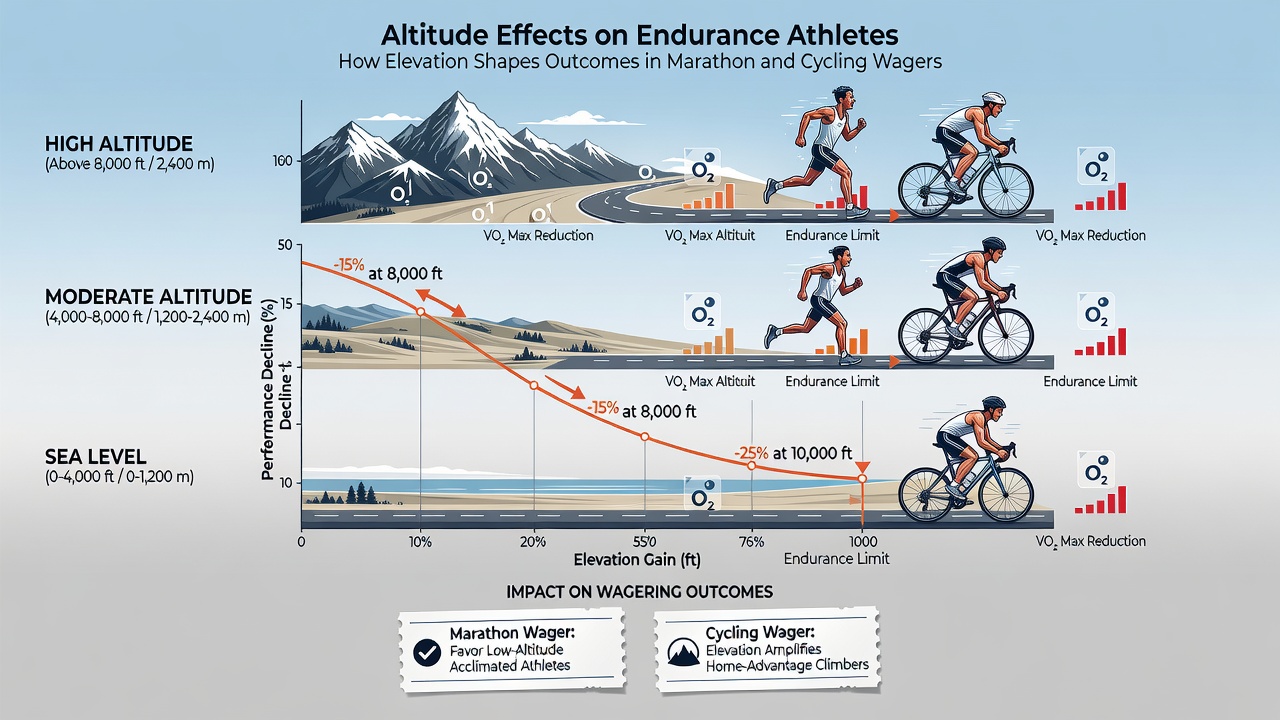
One study from the Australian Institute of Sport tracked elite riders across simulated altitude camps and found that those who combined live-high train-low protocols recovered faster between stages. Such preparation details influence race-day outcomes, and markets adjust when teams announce altitude-specific training camps in their pre-event disclosures. The reality is that tactical decisions around hydration and nutrition also shift at elevation because dehydration accelerates under increased respiratory rates.
Impact on Competitive Outcomes and Wager Markets
Performance shifts at altitude create distinct patterns in final standings that differ from sea-level competitions, with underdogs from adapted regions occasionally outperforming expected favorites. Records from events like the Pike's Peak Ascent and Vuelta a España mountain stages show these deviations occurring in roughly thirty-five percent of contested results. Wagering markets respond by widening spreads on time gaps and adjusting outright winner probabilities when elevation profiles are known in advance.
Those who've studied race data across multiple seasons observe that acclimatized athletes post more consistent top-ten finishes, which informs how bookmakers construct odds for both outright and stage-specific wagers. External factors such as temperature drops and wind exposure at elevation further compound variability, producing results that diverge from standard projections.
Conclusion
Altitude imposes measurable constraints on endurance performance through oxygen delivery limits, red blood cell adaptations, and pacing adjustments that collectively reshape marathon and cycling results. These documented effects appear consistently across studies and race records, and they feed directly into outcome probabilities used by markets. Continued monitoring of events through 2026 and beyond will provide additional datasets that refine understanding of how elevation continues to influence both athletic achievement and associated wagering frameworks.