Advanced Pattern Recognition in Competitive Card Play
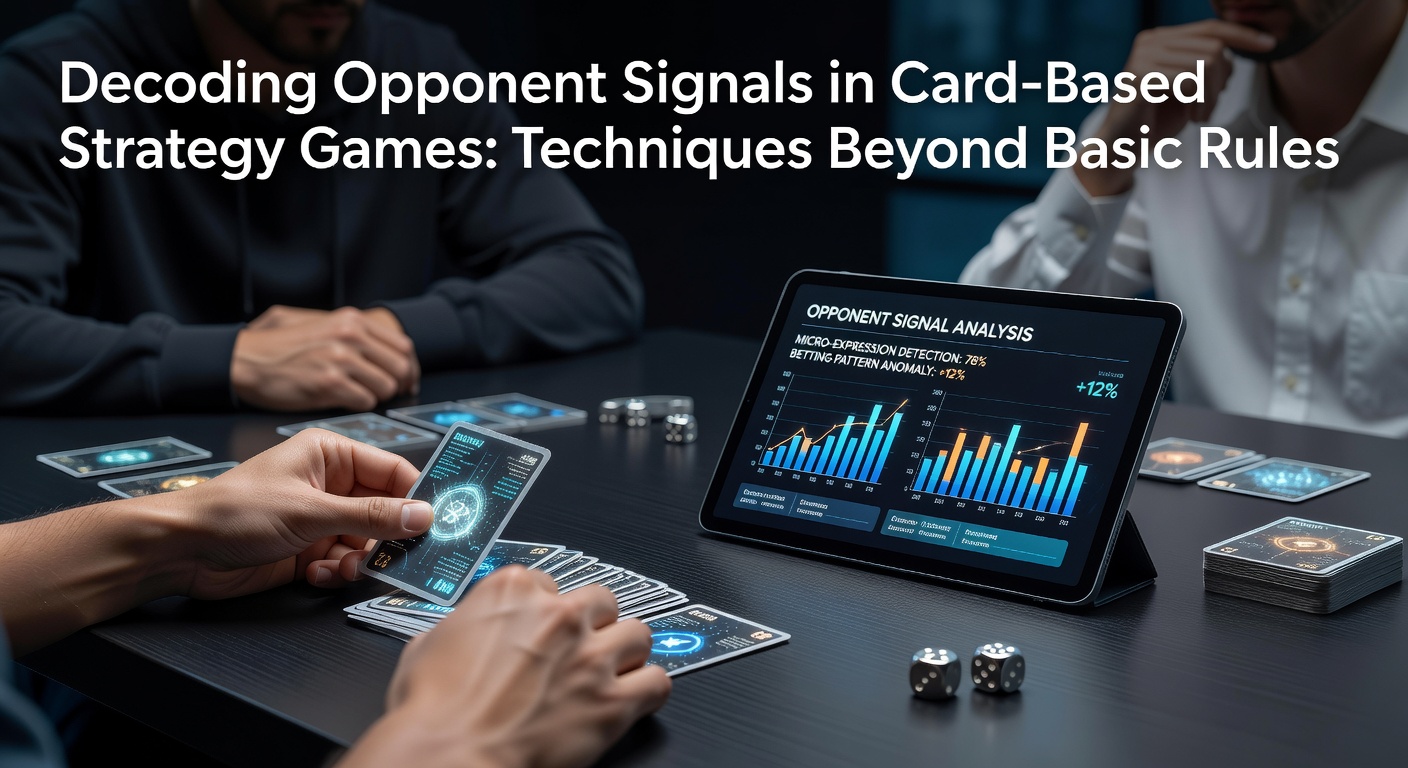
Card-based strategy games require participants to process multiple layers of information that extend well beyond printed rules and standard probabilities, and observers note that skilled players routinely track betting rhythms along with timing variations to build profiles of opposing styles. Researchers have documented how consistent deviations in wager sizing often correlate with hand strength categories across repeated sessions, while those who study tournament data from major events point out that frequency tracking provides measurable edges when applied systematically over hundreds of hands.
Betting Sequences and Frequency Analysis
Players who maintain detailed records of action sequences discover that opponents tend to repeat certain patterns under specific board textures, and this repetition becomes exploitable once sample sizes grow large enough to distinguish noise from signal. Data from organized play shows that bet sizing tells appear most reliably in no-limit formats where stack depths allow for graduated pressure, whereas fixed-limit games shift emphasis toward timing and verbal indicators instead. Analysts at institutions tracking competitive card events have found that frequency mapping outperforms intuition alone when participants update their models after each orbit.
Physical Movement and Timing Indicators
Body posture adjustments and chip handling routines supply additional data streams that experienced competitors integrate with betting histories, and studies conducted in controlled environments demonstrate that involuntary movements increase when participants hold marginal holdings. Timing between decision points also functions as a reliable marker because deviations from an individual's baseline often coincide with changes in hand category, according to observations compiled during large-scale events. Those analyzing professional circuits report that elite players deliberately vary their own rhythms to mask these natural tendencies, which forces opponents to work with noisier datasets.
Verbal and Interaction-Based Signals
Conversation patterns during play sessions reveal information through topic selection and speech cadence, and researchers examining recorded matches have catalogued how certain players increase chatter volume when attempting to project strength. Table talk that references previous hands or external events sometimes functions as misdirection, while silence after a significant action can indicate discomfort with the current situation. Organizations monitoring competitive integrity note that verbal leakage appears more frequently among less experienced participants who have not yet developed consistent control over their interaction styles.
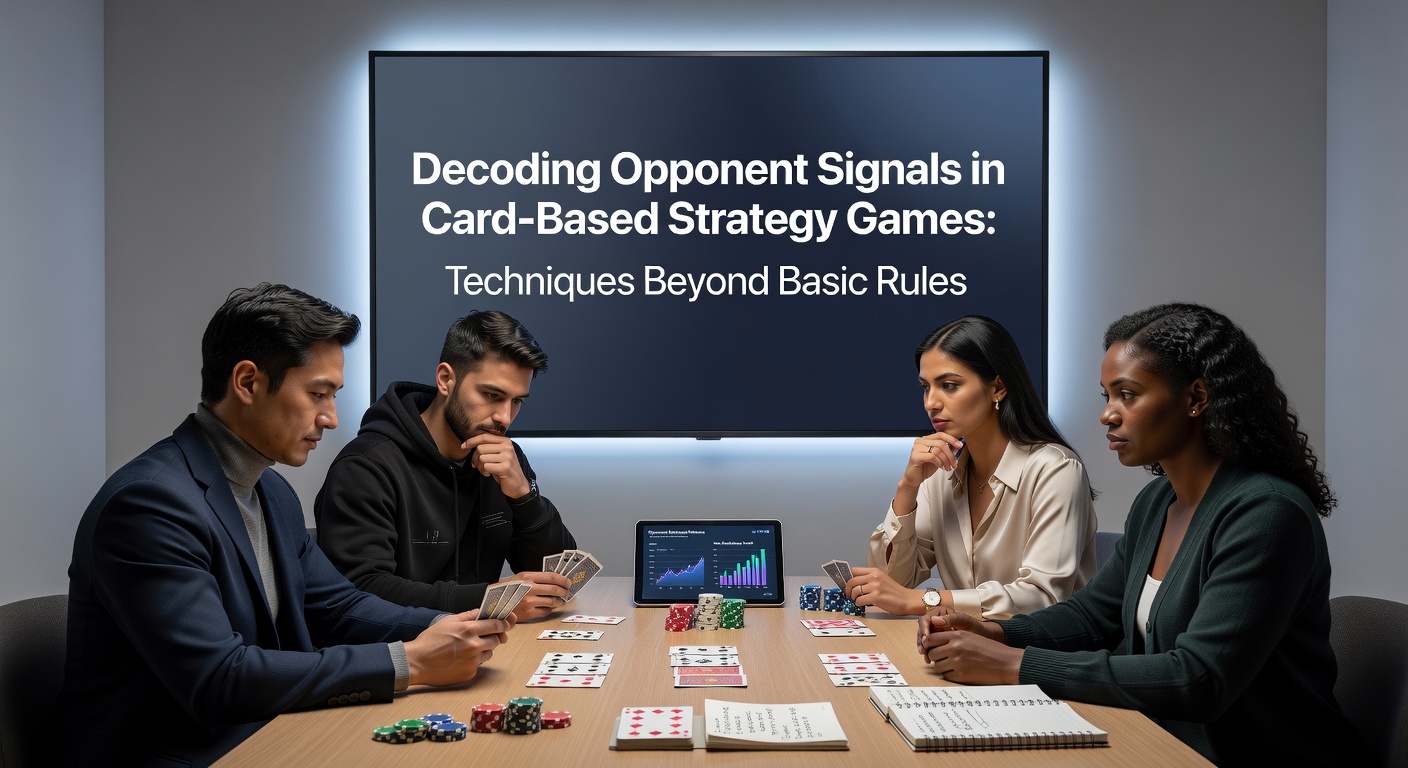
Software tools designed for session logging allow competitors to overlay multiple signal categories onto single profiles, and this integration produces more accurate predictions than isolated observation of any single category. Participants in high-volume environments such as multi-table tournaments benefit from automated tracking that flags deviations in real time, while home game settings rely more heavily on manual note-taking systems that accumulate data across weekly gatherings. Reports from the American Gaming Association highlight how technology adoption continues to reshape information availability at both professional and recreational levels.
Contextual Adaptation Across Game Variants
Different card formats emphasize distinct signal channels because structural rules alter the information available during each decision, and bridge players for instance rely more on bidding tempo and card placement habits than on bet sizing. Poker variants with community cards create opportunities for reaction-based reads on flop textures, whereas draw games shift focus toward discard patterns and redraw frequencies. Academic work published through Canadian university research programs shows that cross-variant experience improves overall signal detection because practitioners learn to isolate format-specific noise from universal behavioral markers.
June 2026 tournament schedules include several large-scale events where live observation remains central to strategy, and data collection efforts at these gatherings continue to refine collective understanding of how signals interact under varying stack depths and payout structures. Players who combine live observation with post-session review achieve higher consistency because repeated exposure allows calibration of individual baselines against population tendencies.
Conclusion
Effective decoding of opponent signals rests on systematic collection and cross-referencing of multiple data types rather than reliance on any single cue, and current practices demonstrate that disciplined tracking produces measurable improvements in decision quality across card-based formats. Continued development of recording tools alongside ongoing academic examination of behavioral patterns ensures that participants maintain access to evolving methodologies for competitive advantage.